
Government Assistant: AI Simplifies Policy Search
This article presents the Government Policy Assistant application built on Tencent Cloud ADP platform, leveraging AI agent technology.


Executive Summary
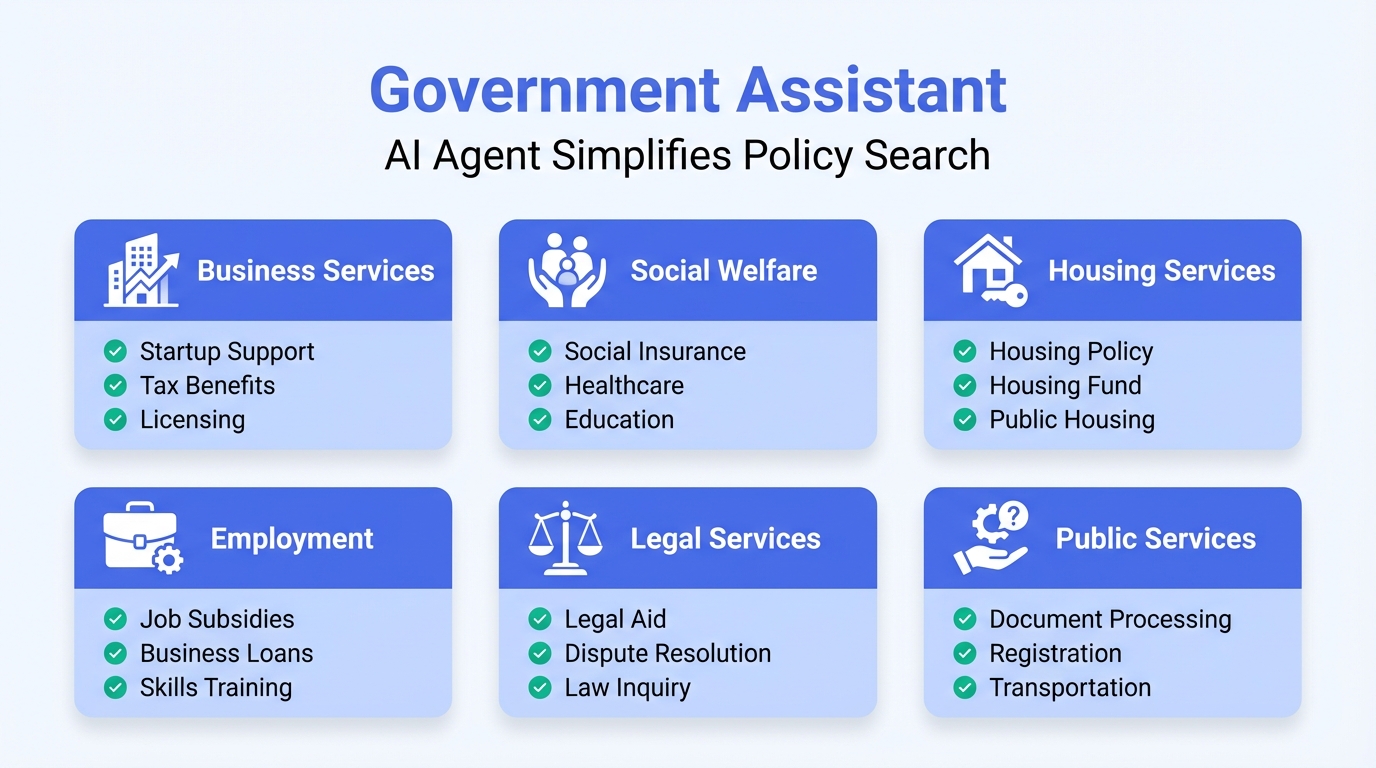
In the era of digital government transformation, making complex policy documents accessible and understandable has become a critical challenge for improving public service efficiency. This article presents the Government Policy Assistant application built on Tencent Cloud ADP, leveraging AI agent technology to enable intelligent policy interpretation and significantly enhance citizen service experience.
Business Background and Pain Points
Challenges in Government Services
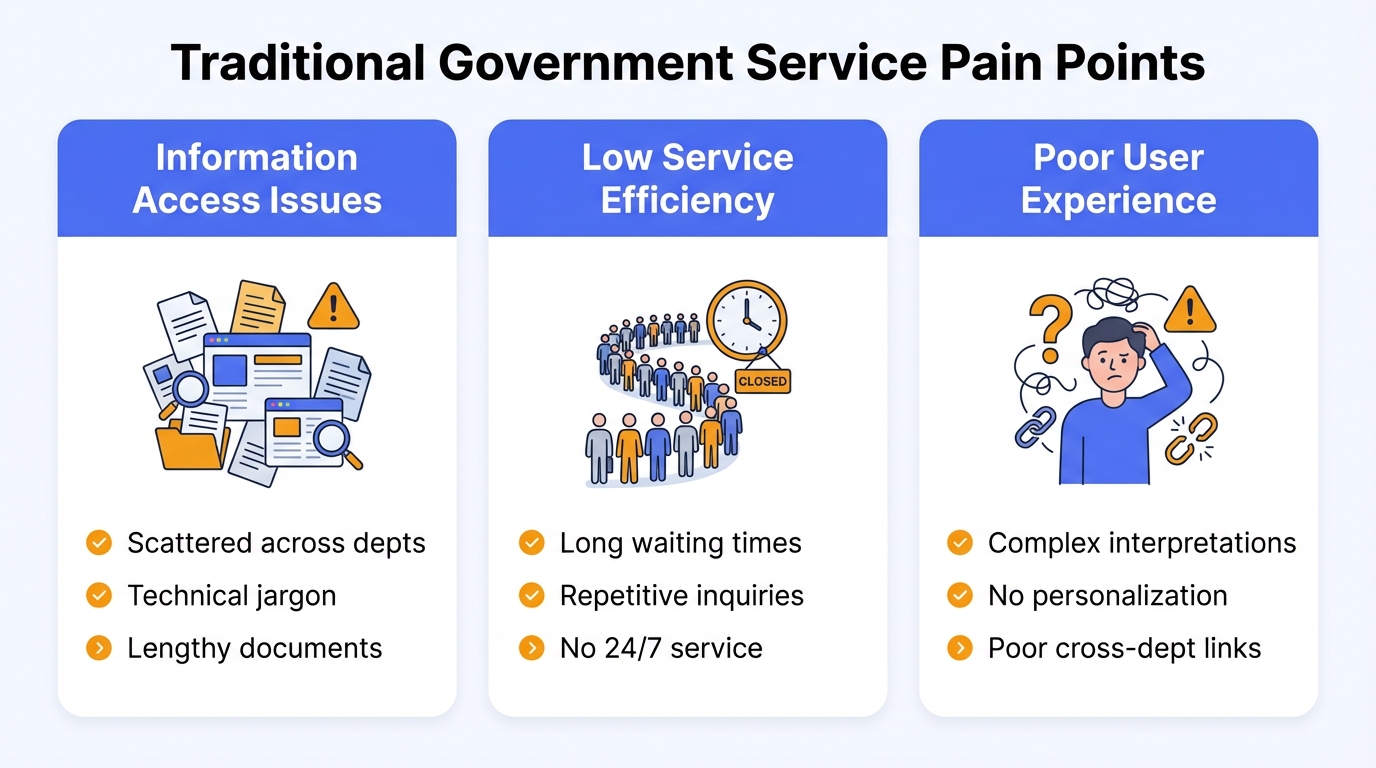
Government agencies publish numerous policy documents annually, covering areas from social welfare to business support and governance. However, traditional policy inquiry and understanding methods face several challenges:
Information Access Difficulties
- Policy documents scattered across different department websites
- Heavy use of technical jargon difficult for citizens to understand
- Lengthy documents making key information hard to locate
Low Service Efficiency
- Long waiting times for human consultation
- Staff repeatedly answering identical questions
- Inability to provide 24/7 service coverage
Poor User Experience
- Policy interpretations lack plain language explanations
- Absence of personalized policy recommendations
- Poor cross-department policy correlation
Business Process Analysis
Traditional Policy Inquiry Workflow
Traditional policy inquiries typically involve these steps:
- Information Gathering: Users search across multiple government websites
- Document Download: Download PDF or Word format policy files
- Content Reading: Page-by-page reading of lengthy policy texts
- Key Point Extraction: Manual compilation of critical information and eligibility criteria
- Clarification Consultation: Phone or in-person consultation for implementation details
This process often requires hours or even days, severely impacting government service efficiency.
Intelligent Transformation Requirements
Based on user pain point analysis, government service digitization needs to achieve:
- One-stop Inquiry: Integration of multi-department policy information
- Intelligent Interpretation: Converting technical language into plain English
- Precise Matching: Recommending relevant policies based on user needs
- Real-time Q&A: 24/7 intelligent customer service support
Solution Architecture
Government Assistant Overall Architecture
The Government Policy Assistant is built on Tencent Cloud ADP with a multi-layer architecture design:
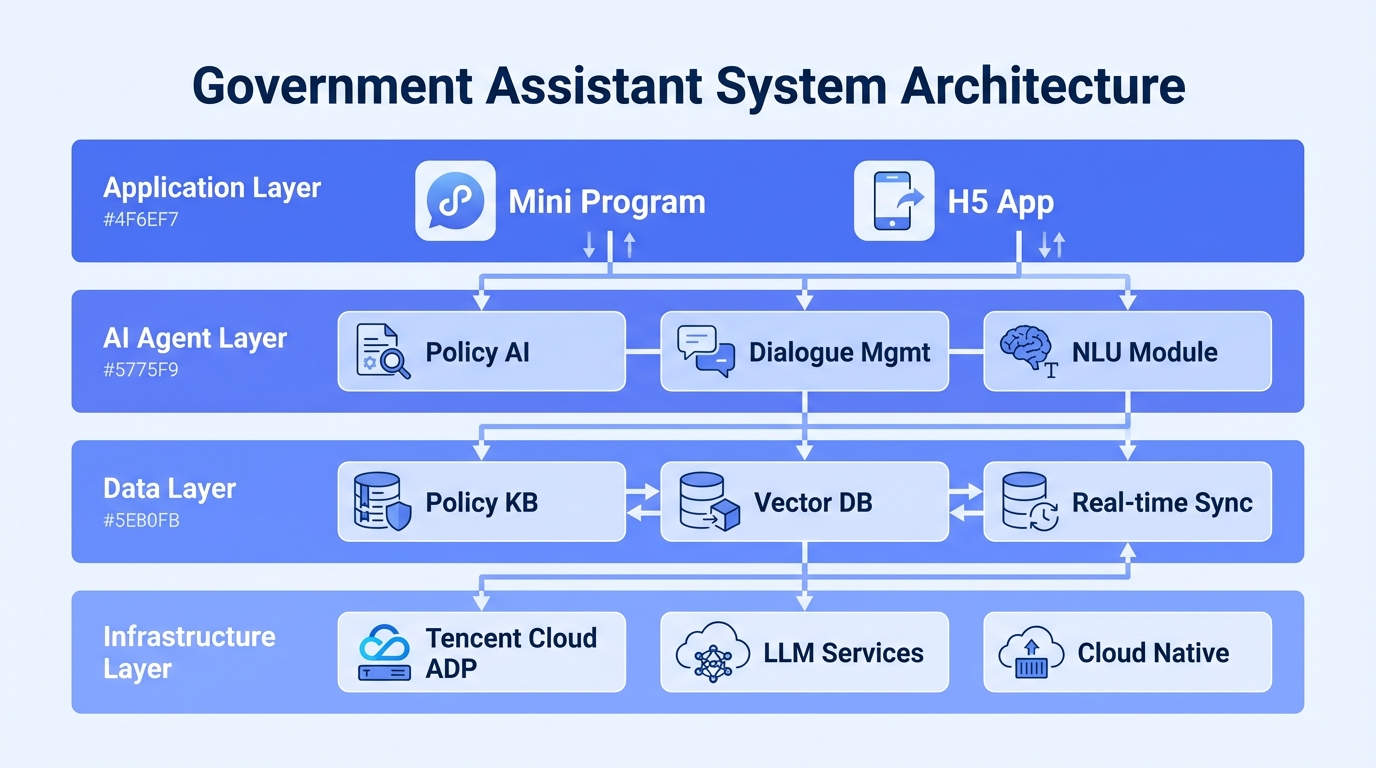
Application Layer
- WeChat Mini Program/H5 application interface
- Support for text input and voice interaction
- Direct policy URL parsing functionality
AI Agent Layer
- Policy interpretation AI Agent
- Natural language understanding module
- Multi-turn dialogue management
Data Layer
- Policy document knowledge base
- Vector database storage
- Real-time data synchronization
Infrastructure Layer
- Tencent Cloud ADP
- Large language model services
- Cloud-native deployment environment
Core Functional Modules
1. Policy URL Parsing Users input policy document URLs, and the system automatically crawls and parses content to extract key information.
2. Topic Intelligent Matching Based on user-input topics of interest, the system intelligently matches relevant policy documents and provides precise recommendations.
3. Policy Content Interpretation Converts complex policy provisions into plain language, highlighting key points and eligibility criteria.
4. Multi-turn Dialogue Interaction Supports users in asking detailed questions about policies, providing personalized policy consultation services.
Key Technical Optimizations
1. Intelligent Policy Document Parsing
Challenge: Policy documents come in various formats, containing numerous tables, charts, and technical terms.
Solution:
- Multi-modal document parsing technology supporting PDF, Word, webpage formats
- OCR and NLP technology for structured information extraction
- Government domain-specific dictionary for improved parsing accuracy
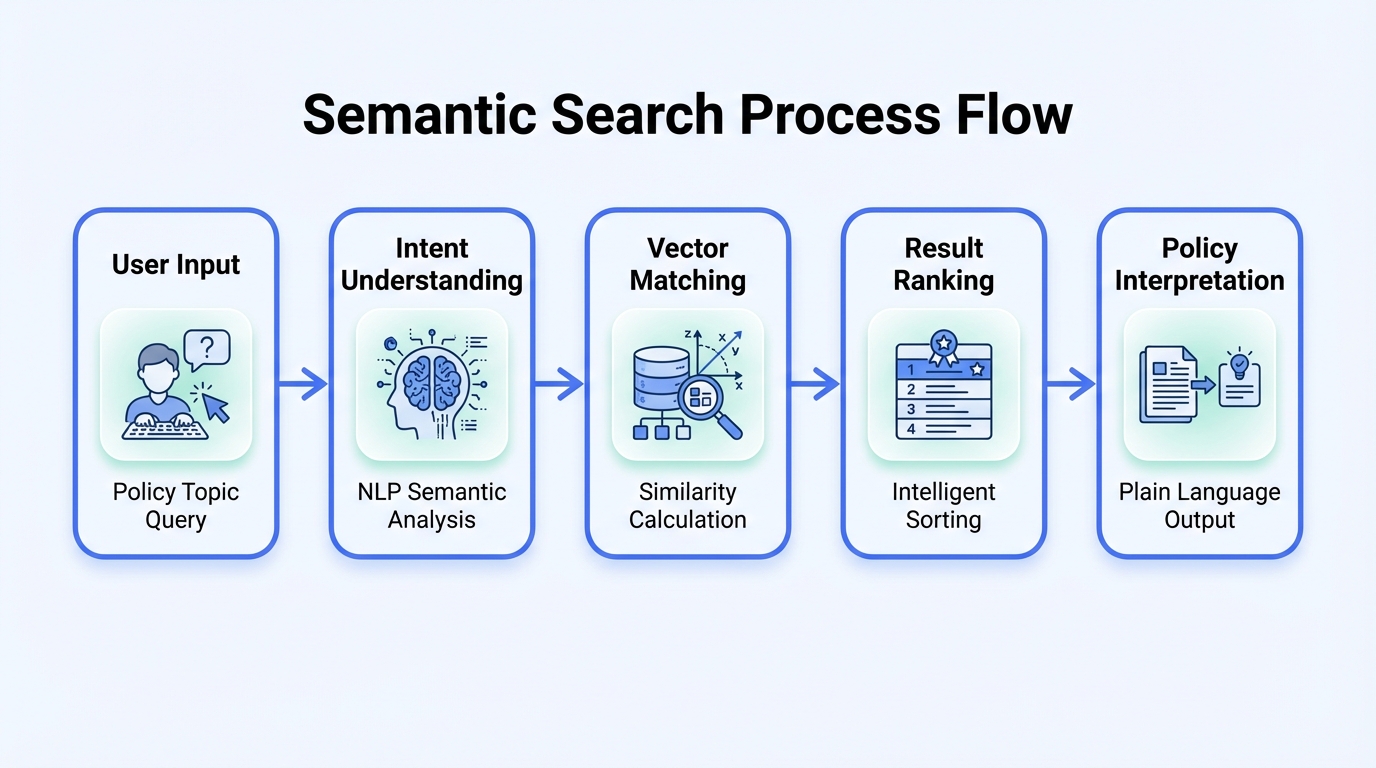
2. Semantic Search and Matching
Challenge: Users express queries in various ways, requiring accurate intent understanding.
Solution:
- Government domain-specific vector model construction
- Semantic similarity calculation and ranking
- Support for fuzzy matching and synonym expansion
3. Policy Interpretation Generation
Challenge: Converting technical policy provisions into understandable interpretations.
Solution:
- Large language model-based policy interpretation generation
- Policy interpretation template library
- Multi-level interpretation (summary, detailed, case studies)
4. Continuous Knowledge Base Updates
Challenge: Frequent policy updates require maintaining knowledge base currency.
Solution:
- Policy website monitoring mechanism
- Incremental updates and version management
- Policy expiration reminder functionality
Actual Output Results
User Interaction Examples
Scenario 1: Policy URL Query
User Input:
"https://www.federalreserve.gov/monetarypolicy/files/monetary20251210a1.pdf Please help me interpret the Federal Reserve's monetary policy"
System Output:
"
I. Comprehensive Report: Federal Reserve December 2025 Monetary Policy Decision Analysis
#### 1. Policy Background
* Economic Environment: In 2025, the Federal Reserve faces dual pressures from inflation and employment. Inflation has been above the 2% target for four and a half consecutive years (PCE inflation forecast median 2.9%), but the job market has deteriorated (unemployment rate rising to 4.5%), combined with the Trump administration's high tariff policies pushing up costs, raising stagflation risks.
* Historical Path: Since starting the rate-cutting cycle in September 2024, the Fed has cumulatively cut rates by 175 basis points (6 times). This is the third rate cut this year (cumulative 75 basis points), lowering the target rate range to 3.5%-3.75%.
* Political Pressure: President Trump has publicly pressured for significant rate cuts, even threatening to fire Powell, testing the Fed's independence.
>#### 2. Core Decision Content
* Rate Adjustment: 25 basis point cut, meeting market expectations (CME prediction probability 90%), but internal dissent emerged for the first time in 6 years with 3 opposing votes (1 person advocated 50 basis point cut, 2 people advocated maintaining rates).
* Policy Tools: Introduced Reserve Management Purchases (RMP), planning to purchase $40 billion in short-term Treasuries to maintain liquidity, emphasizing this is technical balance sheet expansion, not a monetary policy shift.
* Forward Guidance:
* Hawkish Rate Cut: Released signals of "higher threshold for future rate cuts" through statements and Powell's remarks, avoiding excessive market optimism.
* Raised GDP growth forecast (2025: 1.7%, 2026: 2.3%), lowered inflation expectations (2025 PCE: 2.9%→2026: 2.4%)"
Scenario 2: Topic Keyword Query
User Input:
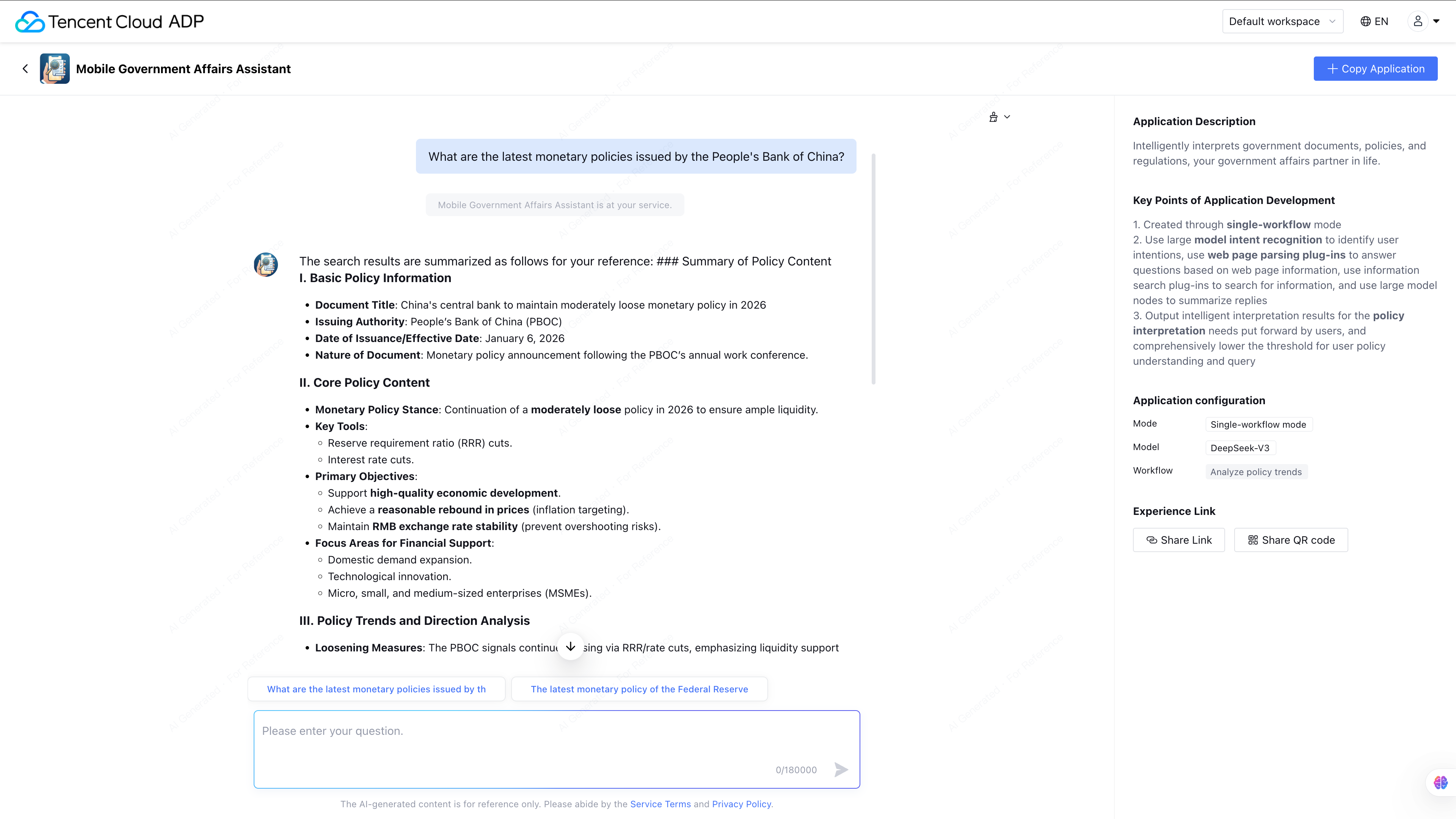
"What are the latest monetary policies issued by the People's Bank of China?"
System Output:
"From Q4 2025 to early 2026, the People's Bank of China (PBOC) has continuously released multiple monetary policy adjustment measures aimed at addressing the structural contradiction of 'strong supply, weak demand' in the economy and promoting high-quality economic development. The policy tone continues to be 'moderately accommodative,' emphasizing counter-cyclical and cross-cyclical adjustments, with key support for technology innovation, small and micro enterprises, green transformation, and other critical areas.
---
#### Core Policy Content
1. Structural Tool Rate Reduction
* Various re-lending rates reduced by 0.25 percentage points (e.g., 1-year rate from 1.5% to 1.25%), lowering bank funding costs to encourage credit expansion.
2. Targeted Credit Support Expansion
* Private Enterprises: Separate 1 trillion yuan re-lending quota specifically supporting small and medium private enterprises.
* Agriculture and Small Business Support: Merged agriculture and small business re-lending with rediscount quotas, adding 500 billion yuan.
* Technology Innovation: Technology innovation re-lending quota increased from 800 billion to 1.2 trillion yuan, covering private enterprises with high R&D investment.
3. Bond and Green Finance Tools
* Merged technology innovation and private enterprise bond risk-sharing tools (200 billion yuan quota).
* Carbon reduction tools extended to energy-saving renovation, green upgrading, and other areas.
4. Real Estate and Consumer Support
* Commercial property loan down payment ratio reduced to 30%, helping commercial real estate destocking.
* Elderly care and health industries included in service consumption re-lending support scope.
5. Exchange Rate and Liquidity Management
* Maintain RMB exchange rate flexibility, prevent overshooting risks; enrich exchange rate hedging products.
* Removed 'prevent capital idling' language, emphasizing 'improve capital utilization efficiency'."
Project Results
Quantitative Improvements
Service Efficiency Enhancement
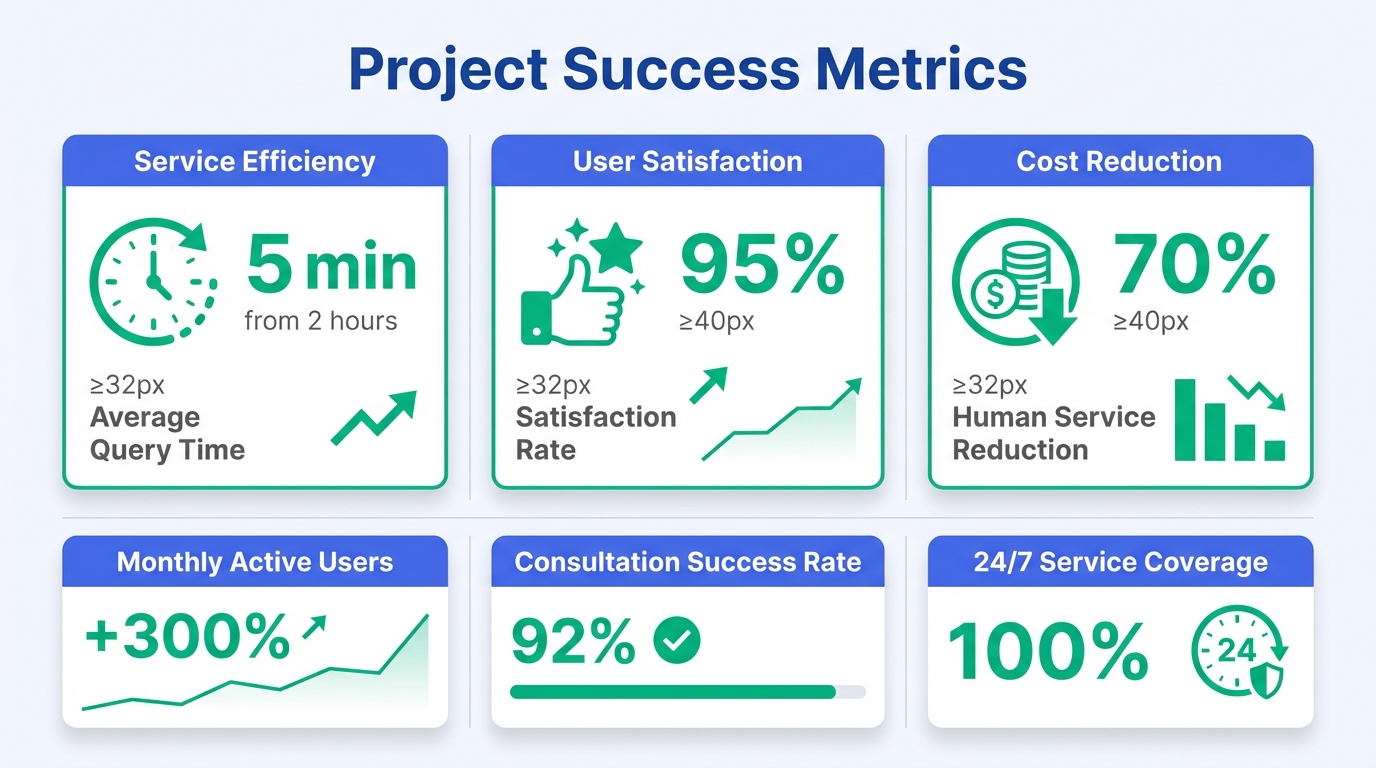
- Policy inquiry time reduced from average 2 hours to 5 minutes
- User satisfaction increased to over 95%
- Consultation success rate reached 92%
Operational Cost Reduction
- Human customer service workload reduced by 70%
- Policy interpretation accuracy rate over 90%
- 100% 24/7 service coverage
User Experience Improvement
- Monthly active users increased by 300%
- Average user session duration increased by 150%
- Policy awareness rate improved by 40%
Typical Application Scenarios
Enterprise Service Scenarios
- Startup policy support inquiries
- Tax incentive policy interpretation
- Industry entry requirement consultation
Public Service Scenarios
- Social security policy queries
- Education and healthcare policy interpretation
- Housing security policy consultation
Social Governance Scenarios
- Environmental policy promotion and interpretation
- Safety production regulation queries
- Legal regulation education and popularization
Industry Applicability
Applicable Industry Sectors
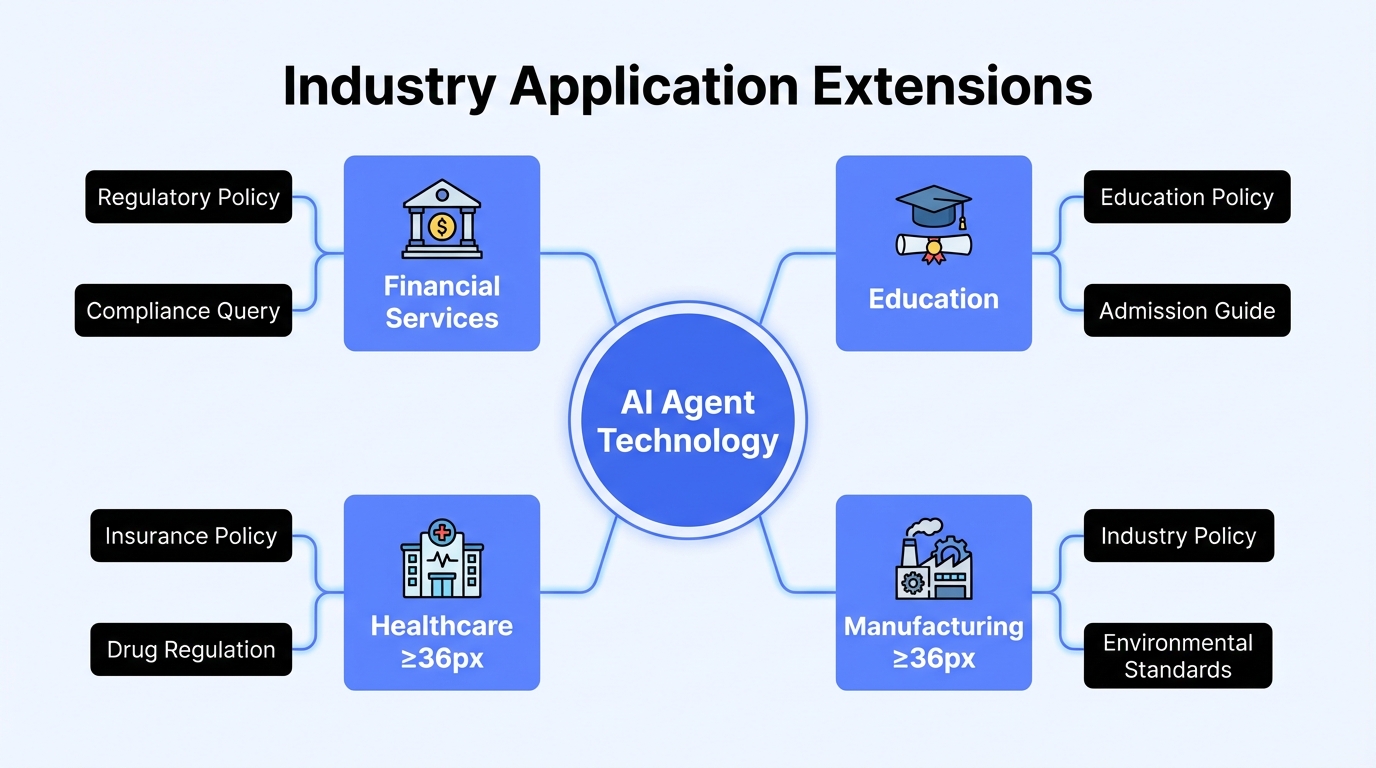
The Government Assistant's technical solution has good industry applicability and can be extended to:
Financial Services Industry
- Regulatory policy interpretation
- Compliance requirement queries
- Business guidance consultation
Education and Training Industry
- Education policy interpretation
- Admission policy queries
- Academic credential guidance
Healthcare Industry
- Medical insurance policy interpretation
- Drug regulation queries
- Medical service standards
Manufacturing Industry
- Industrial policy interpretation
- Environmental standard queries
- Safety production regulations
Technology Reuse Value
Core Technical Components
- Intelligent document parsing engine
- Semantic search and matching system
- Multi-turn dialogue management framework
- Knowledge base update mechanism
Platform Capabilities
- Rapid domain adaptation
- Flexible deployment options
- Standard API interfaces
- Comprehensive monitoring system
Frequently Asked Questions
Q1: How do you ensure the accuracy of policy interpretations?
A1: We employ multiple safeguard mechanisms:
- Establish government domain expert review processes
- Implement cross-referencing between original policies and interpretations
- Set confidence scoring and risk alerts
- Conduct regular accuracy assessments and optimizations
Q2: How does the system handle policy updates and revocations?
A2: We have established comprehensive policy lifecycle management:
- Automatic monitoring of government website policy updates
- Policy version management and change tracking
- Automatic policy expiration reminder functionality
- Support for historical policy queries and comparisons
Q3: How are user privacy and data security protected?
A3: We strictly follow data security and privacy protection requirements:
- End-to-end encrypted transmission
- User data anonymization processing
- Comprehensive access control mechanisms
- Regular security audits and vulnerability scanning
Q4: How do you adapt to policy differences across regions?
A4: We support multi-level policy management:
- Establish national, provincial, municipal, and county-level policy databases
- Intelligent geographic location recognition
- Automatic policy applicability scope matching
- Cross-regional policy comparison functionality
Conclusion
The Government Policy Assistant successfully addresses policy inquiry and understanding pain points through AI agent technology, achieving intelligent upgrade of government services. The project's successful implementation demonstrates the powerful capabilities and broad prospects of Tencent Cloud ADP in the government services sector.
Core Value Summary:
- User Experience: From complex queries to intelligent Q&A, significantly improving service accessibility
- Operational Efficiency: From human customer service to AI assistants, substantially reducing service costs
- Service Quality: From standard responses to personalized interpretations, enhancing service professionalism
- Technical Innovation: From traditional search to semantic understanding, driving government service modernization
As digital government construction deepens, AI agent technology will play increasingly important roles in more government service scenarios, contributing to building service-oriented government and enhancing governance modernization.
Experience Tencent Cloud ADP now and start your government service digitization journey!
Related Reading

Start building today
If you need more support, please contact us