
Intelligent Fitness Assistant: Build a Training AI
A structured knowledge base + RAG for trustworthy exercise and nutrition guidance, workflow orchestration for the end-to-end SOP.


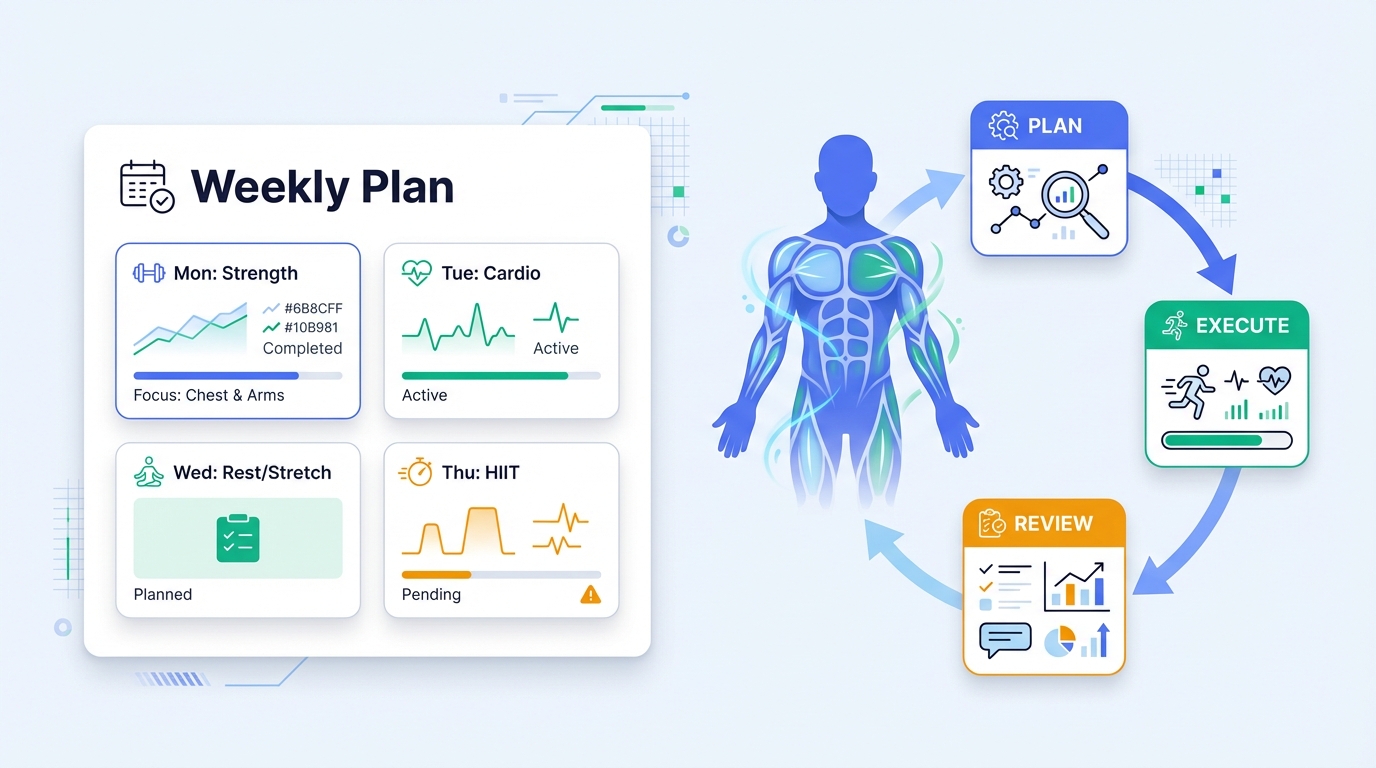
This case study covers:
- Goal and constraint intake across channels (profile, equipment, injury constraints)
- Knowledge base + RAG as a trustworthy safety foundation
- SOP orchestration from planning to review loops
- Guardrails and escalation for risk control
You'll learn: How to ship an intelligent fitness assistant as an AI Agent - not a chatbot.
Business Background & Pain Points
Why "fitness advice" does not equal "fitness outcomes"
In fitness apps, coaching platforms, and gym chains, user intent is outcome-driven (fat loss, muscle gain, posture improvement). But delivery often breaks into disconnected pieces: plan generation, workout execution, nutrition tips, logging, and progress review live in different experiences and teams.
The common failure mode: the bot answers questions well, but cannot reliably handle "What should I do today?", "How do I modify this for my knee?", "What does this week's data mean?", and "How should next week change?" - so users churn.
Traditional Approach Challenges
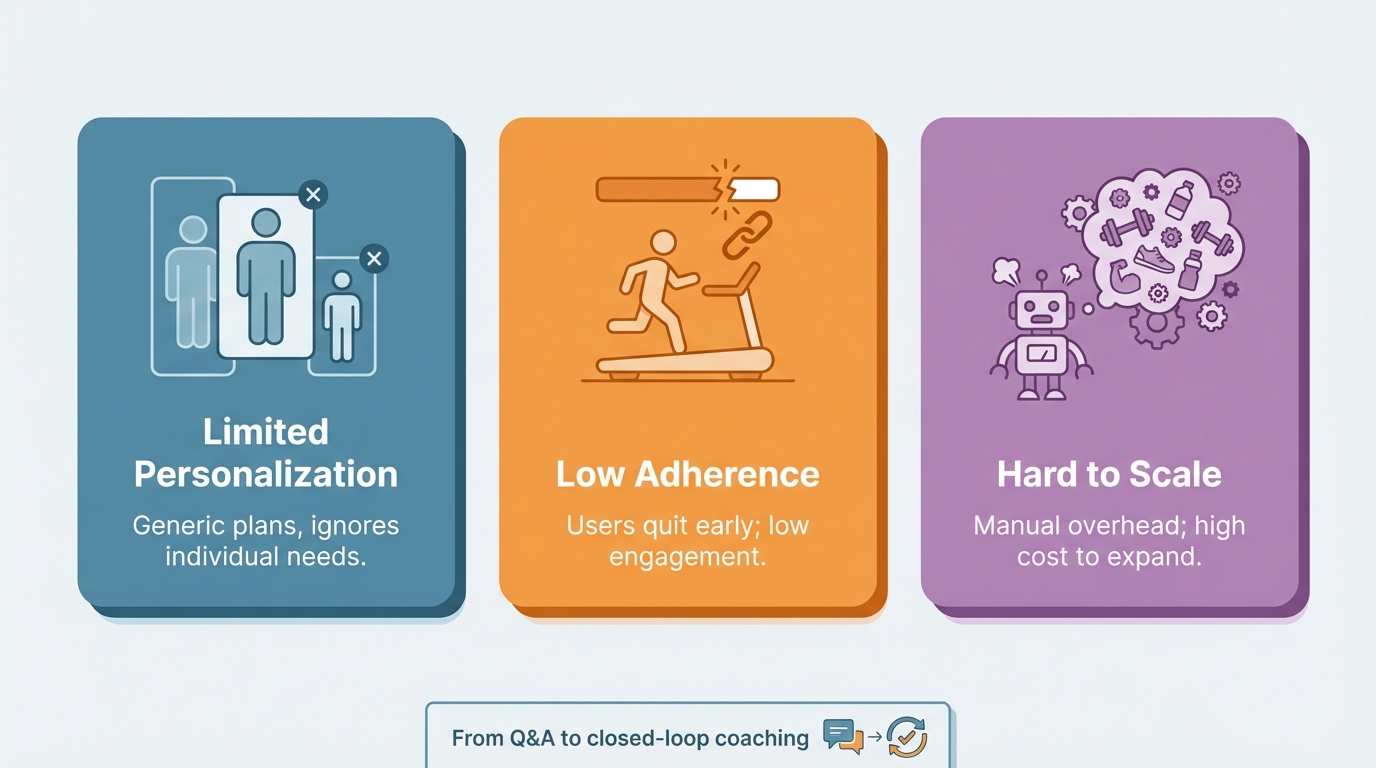
| Challenge | Symptoms | Business Impact |
|---|---|---|
| Limited personalization | Template plans; weak constraint handling | Lower conversion and retention |
| Low adherence | No execution scaffolding or feedback loop | Unstable outcomes; higher churn |
| Hard to scale | Human coach bottlenecks for Q&A and plan edits | Higher service cost; variable experience |
Customer Goals
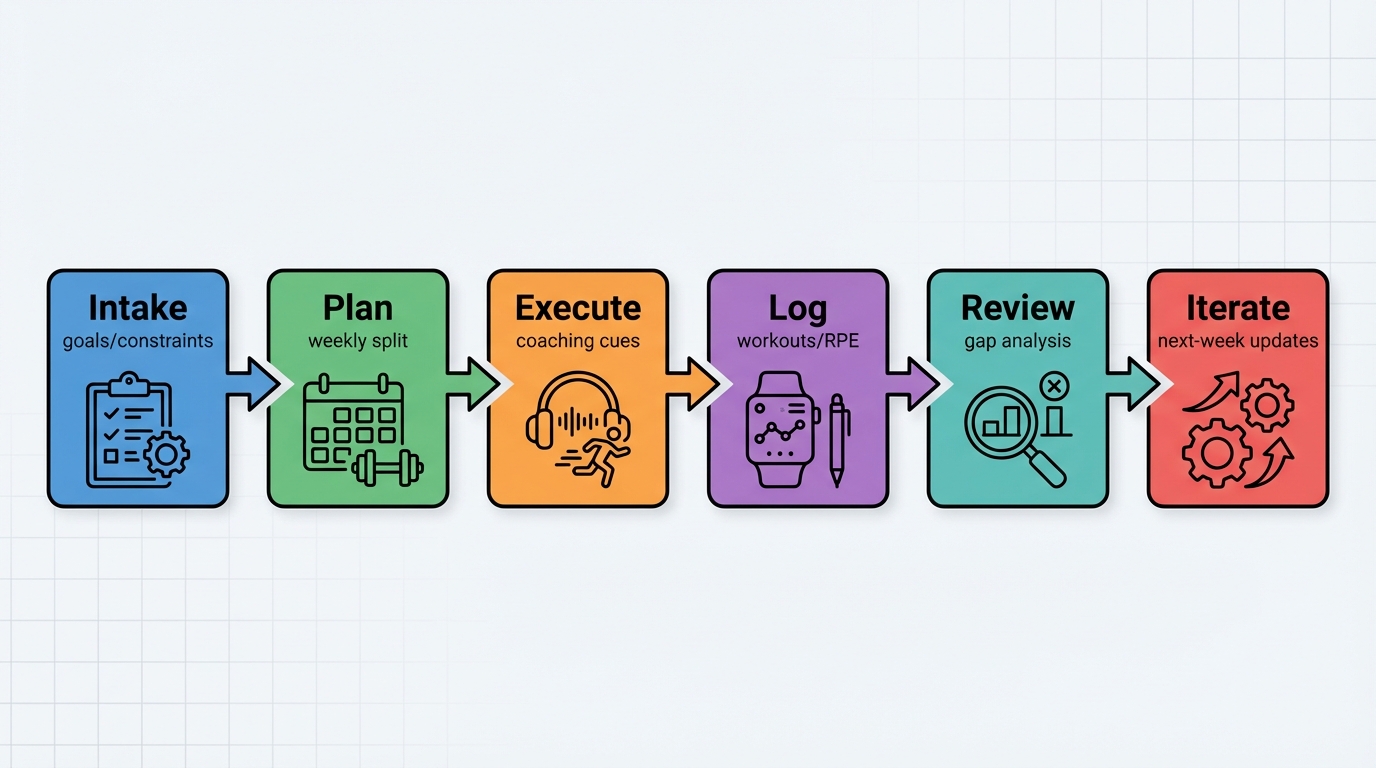
Users want continuity: clear intake -> an actionable plan -> step-by-step guidance with alternatives -> a review that turns data into next steps.
Business Process Analysis
Treat the assistant as a repeatable service pipeline: intake -> plan -> guide execution -> log -> review -> iterate.
Input Requirements
- Goals and time constraints: goal type, time horizon (4-12 weeks), weekly training frequency
- Resources and limitations: equipment, time per session, injury constraints and forbidden movements
- Baseline signals: starting metrics (optional), training history, dietary preferences and allergies
Expected Outputs
| Module | Task | Output Format |
|---|---|---|
| Planning | weekly structure, day plan, progression rules, substitutions | structured plan cards / tables |
| Execution guidance | warm-up/cues, RPE/rest, safety reminders | step-by-step guidance + guardrails |
| Review loop | adherence and trend review, gap analysis, next-week updates | review summary + updated plan |
Tencent Cloud ADP Solution Architecture
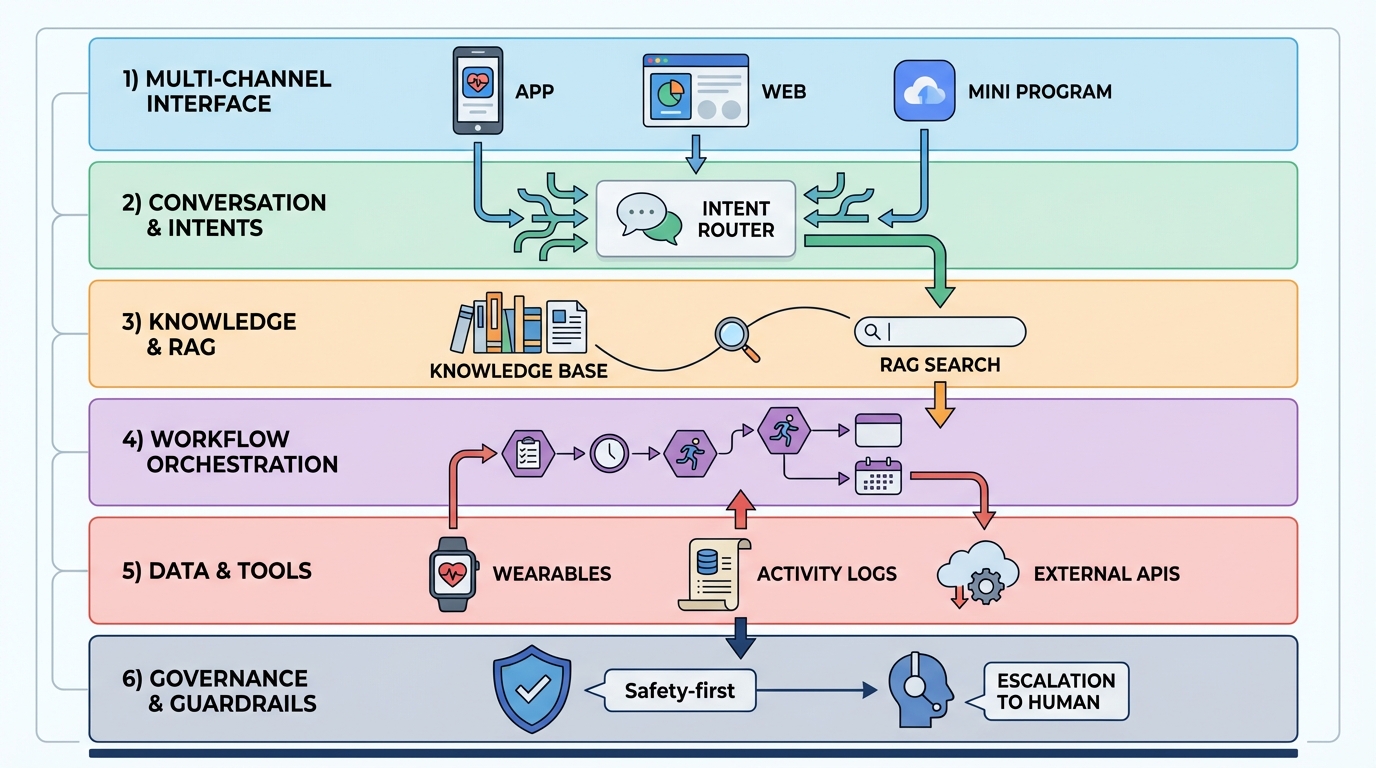
To turn advice into outcomes, the assistant needs two capabilities: grounded knowledge and actionable workflows. The first comes from a curated knowledge base + RAG. The second comes from orchestration and tool integration.
Core Components
| Component | Function | Implementation |
|---|---|---|
| Intent routing and dialogue state | route "plan / exercise / nutrition / review" intents | multi-turn state + intent classification |
| Knowledge base + RAG | safe, explainable guidance for exercises and nutrition | structured docs + retrieval-augmented generation |
| Workflow orchestration + tools | plan generation, logging, review computation, plan updates | workflow nodes + APIs/forms |
Key Technical Optimizations
Optimization 1: Structured plans (make advice executable)
Problem: free-form text plans are hard to reuse, track, and iterate; multi-session conversations drift.
Approach: introduce a plan schema (goal, days, exercises, sets, intensity, rest, substitutions). Split generation into two phases:
- Weekly structure: principles and split for the week
- Daily table: an execution-ready list per session
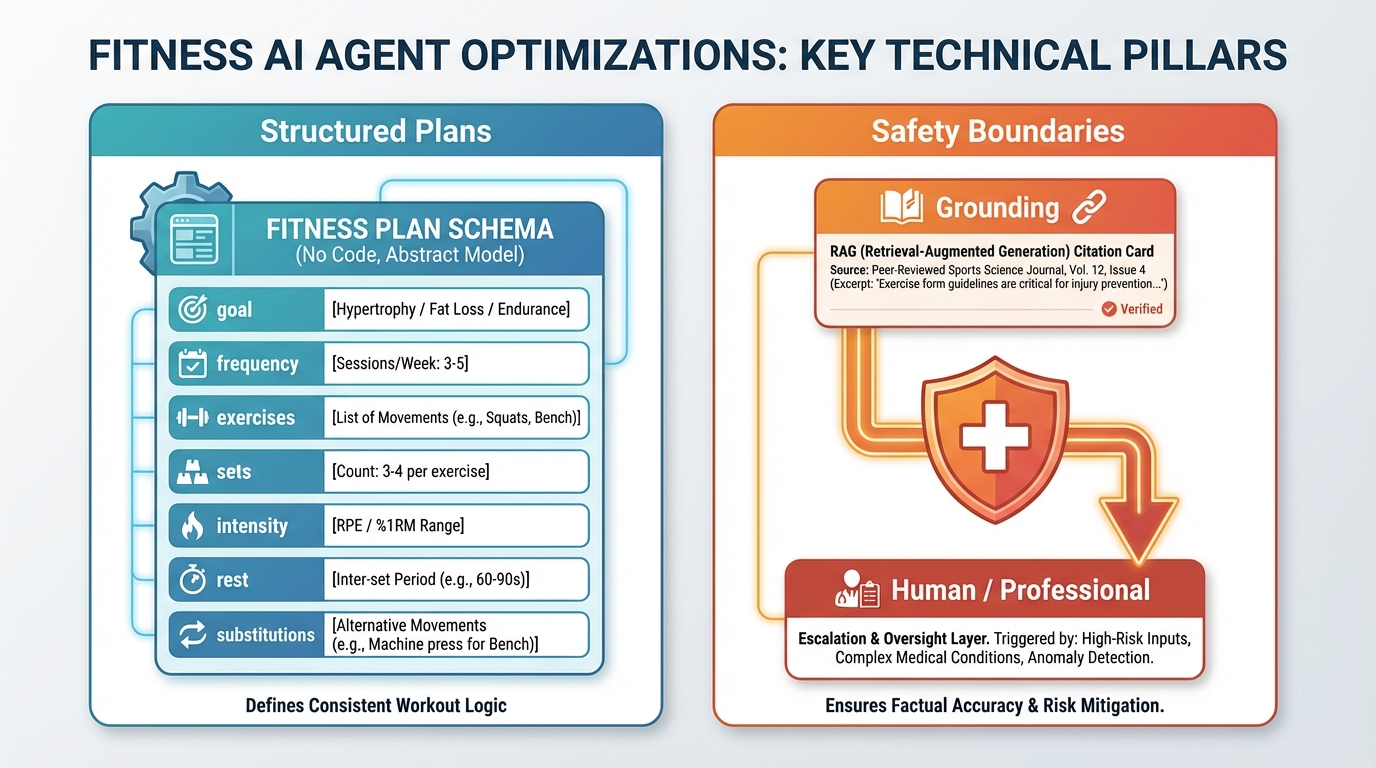
Optimization 2: RAG grounding (make guidance explainable)
Route high-risk content through retrieval: cues, contraindications, and safety notes should be grounded with citations. Add stricter policies when signals like pain, dizziness, or medical history appear.
Optimization 3: Safety guardrails + escalation (make risk controllable)
Draw clear boundaries: do not provide medical diagnosis; for high-risk scenarios, recommend professional help or escalate to a certified coach. Add extra caution for minors, pregnancy, or special populations.
Real-World Results
Sample Input
User: "I want an 8-week fat loss plan. 4 days a week, 45 minutes each. I only have dumbbells and bands. My knee hurts with squats. Keep nutrition simple."
Generated Output
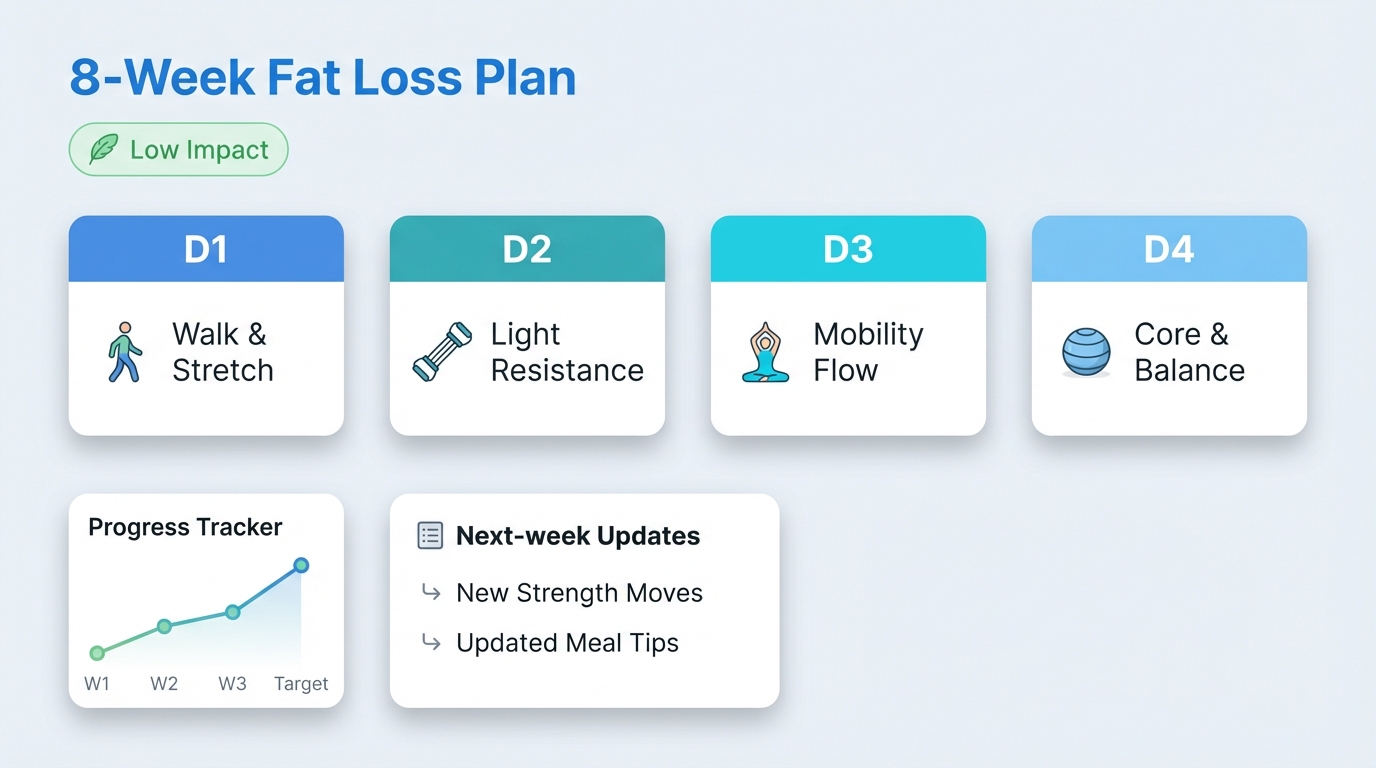
A production-quality output should include:
- a weekly split and a clear 8-week progression plan
- per-day workouts with substitutions (knee-friendly options)
- intensity and progression rules (RPE, rest, progression)
- simple nutrition guidance (actionable plate model)
- a review rule set: update next week based on adherence, trends, and fatigue
Project Outcomes
| Metric | Traditional | AI Agent | Improvement |
|---|---|---|---|
| Plan turnaround time | 10-30 min per user | seconds + reusable templates | significantly reduced |
| Review efficiency | manual spot checks | automated summaries + gap analysis | improved |
| Service coverage | queues and missed replies | 24/7 self-serve + escalation | improved |
Industry Applicability
A fitness assistant is a "content + workflow + data" agent. The same pattern applies to many health and behavior-change scenarios.
Replicable Value
- Turn advice into a process: SOP-driven delivery rather than one-off chat
- Turn data into next actions: review loops that update plans
- Put risk behind guardrails: clear boundaries and escalation
Applicable Scenarios
| Industry | Similar Use Cases | Core Value |
|---|---|---|
| Fitness and sports | coaching programs, posture correction | better adherence and scalable service |
| Health management | weight management (non-medical), habit coaching | measurable, iterative outcomes |
| Employee wellbeing | wellness programs and challenges | lower-cost coverage and operations |
FAQ
Q1: Can a fitness AI agent give unsafe advice?
A: It can if you ship it like a chatbot. In production, you need RAG grounding, risk triggers, strict boundaries, and human escalation paths.
Q2: Can we build a closed loop without wearable data?
A: Yes. Start with lightweight signals (check-ins, perceived exertion, trend metrics), then progressively integrate wearables and logs.
Q3: How do we measure success?
A: Track retention, adherence/completion rate, review loop engagement, escalation rate, and user satisfaction - and validate via A/B tests.
Conclusion: Build an operable AI Agent, not a "chatty coach"
The differentiator is not the model - it is the closed-loop system that runs intake, planning, execution, and review as a reliable workflow.
Key success factors:
- structured intake and structured plan outputs
- RAG grounding for high-risk content
- workflow orchestration to make advice executable
- guardrails and escalation for safety and compliance
Ready to get started?
-> Try Tencent Cloud ADP - Knowledge base, workflow engine, and LLM capabilities out of the box. Build your industry AI Agent today.
This article is part of the Enterprise AI Agent series. Related reading:

Start building today
If you need more support, please contact us