
Tencent Hunyuan Hy4 Preview on ADP: 770B MoE Architecture & 1M Context
Tencent Cloud launches Hunyuan Hy4 Preview on ADP featuring 770B MoE architecture and 1M context window for long-running code refactoring and complex analysis.


Introduction
Enterprises deploying production-grade AI agents often encounter critical bottlenecks during long-running tasks. When refactoring complex software repositories, cross-referencing multi-hundred-page financial reports, or orchestrating multi-step workflows across disparate enterprise systems, smaller-context models can suffer from context loss, instruction drift, and unreliable tool execution.
Tencent Cloud will soon introduce Tencent Hunyuan Hy4 Preview to the Tencent Cloud Agent Development Platform (ADP), bringing next-generation long-context and agent-oriented capabilities to enterprise productivity workflows.
Hy4 Preview is a new-generation Mixture-of-Experts (MoE) flagship model with 770B total parameters and 49B activated parameters per token. It supports a context window of more than 1M tokens, making it well suited to large-scale coding, document analysis, scientific computing, financial modeling, and complex multi-step reasoning workloads.
As Hy4 Preview prepares to join ADP, global developers and enterprise teams will be able to explore how ultra-long context, sparse MoE efficiency, and agentic execution capabilities can support the next generation of enterprise AI applications.
Executive Summary
- Tencent Hunyuan Hy4 Preview Coming Soon to ADP: Hy4 Preview will soon be available through Tencent Cloud Agent Development Platform (ADP), expanding model choices for enterprise AI agent development.
- Enterprise-Scale MoE Architecture: With 770B total parameters and 49B activated parameters per token, Hy4 Preview combines large-scale model capacity with sparse inference efficiency.
- 1M-Token Ultra-Long Context: The model supports more than 1M tokens of context, enabling deeper understanding of extensive codebases, long technical documents, financial filings, legal materials, and multi-source enterprise data.
- Designed for Productivity and Agents: Hy4 Preview is built for long-horizon planning, multi-step execution, structured outputs, tool use, and recovery from intermediate failures.
- Future Synergy with ADP: Once available, Hy4 Preview is expected to work alongside ADP capabilities such as sandbox execution, workflow orchestration, enterprise integrations, knowledge augmentation, and observability.
Core Capabilities and Technical Specifications
Hy4 Preview represents a major step forward in long-context reasoning and enterprise productivity. It is designed to help AI agents retain more information, follow instructions more consistently, and complete complex tasks across longer execution loops.
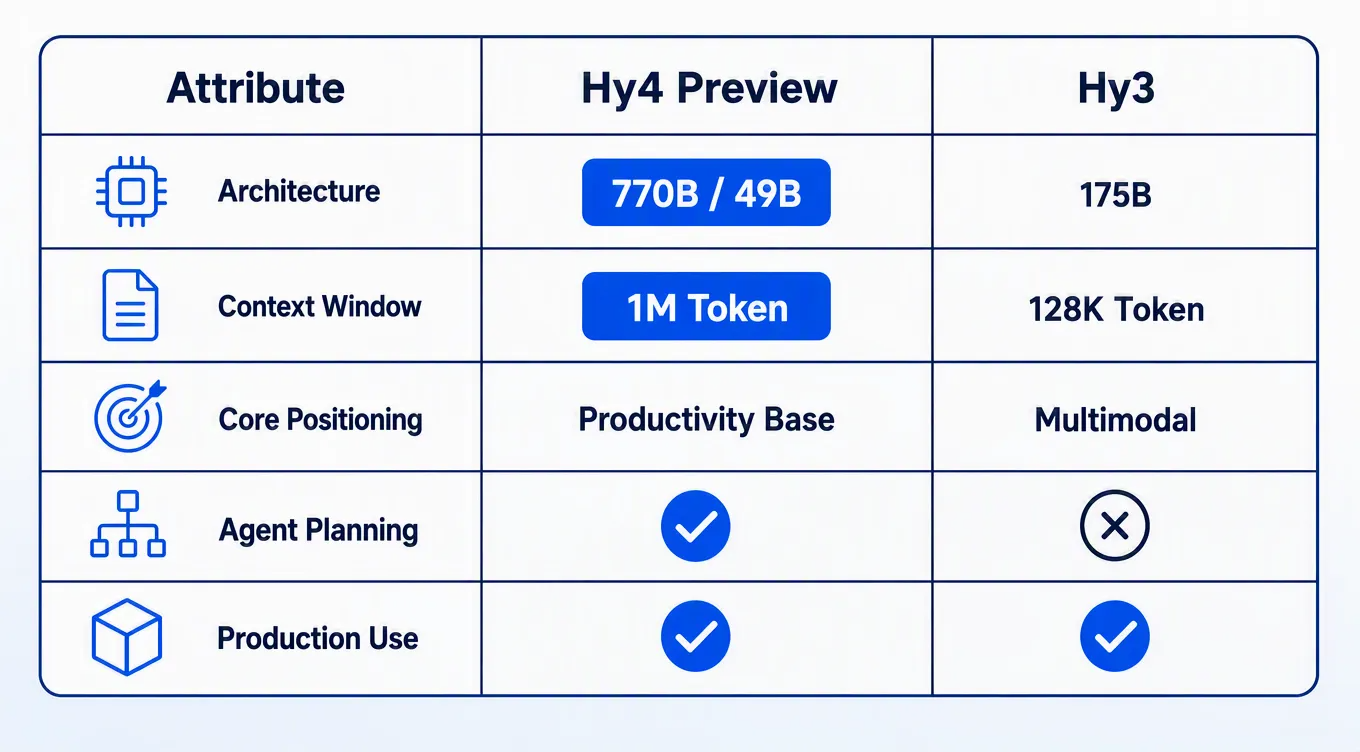
- 770B-A49B MoE Architecture: Hy4 Preview has 770 billion total parameters while activating approximately 49 billion parameters per token. This sparse design is intended to balance broad knowledge capacity, deep reasoning, and practical inference efficiency.
- 1M-Token Context Window: With support for more than one million tokens of context, Hy4 Preview can process large volumes of technical documentation, source code, contracts, reports, and business records with less fragmentation.
- Enhanced for Productivity Workloads: The model is designed for software engineering, data analysis, office productivity, mathematical reasoning, scientific research, and other demanding knowledge-work scenarios.
- Agentic Planning and Tool Calling: Hy4 Preview is optimized for multi-step task planning, structured output generation, persistent context retention, tool invocation, and iterative error recovery.
| Dimension | Tencent Hunyuan Hy4 Preview | Tencent Hunyuan Hy3 |
|---|---|---|
| Architecture & Parameters | MoE Architecture (770B Total / 49B Activated) | MoE Architecture (295B Total / 21B Activated) |
| Context Window | 1M Tokens (approximately 1,024,000 tokens) | 256K Tokens |
| Core Positioning | Complex enterprise productivity, long-horizon agents, repository-scale code analysis, and cross-document reasoning | Cost-effective general productivity, standard document Q&A, and routine workflow automation |
| Agentic Planning | Long-context planning, multi-turn tool orchestration, state retention, and self-correction | Standard multi-step reasoning and tool calling |
| Primary Use Cases | Repository refactoring, complex due diligence, financial analysis, and cross-system enterprise workflows | Knowledge-base Q&A, report drafting, and routine ticket handling |
Scenario 1: Large-Scale Code Repository Refactoring and Developer Agents
Modern software maintenance requires more than generating individual functions. Complex engineering tasks often require understanding dependencies across directories, service boundaries, build configurations, APIs, test suites, and runtime behavior.
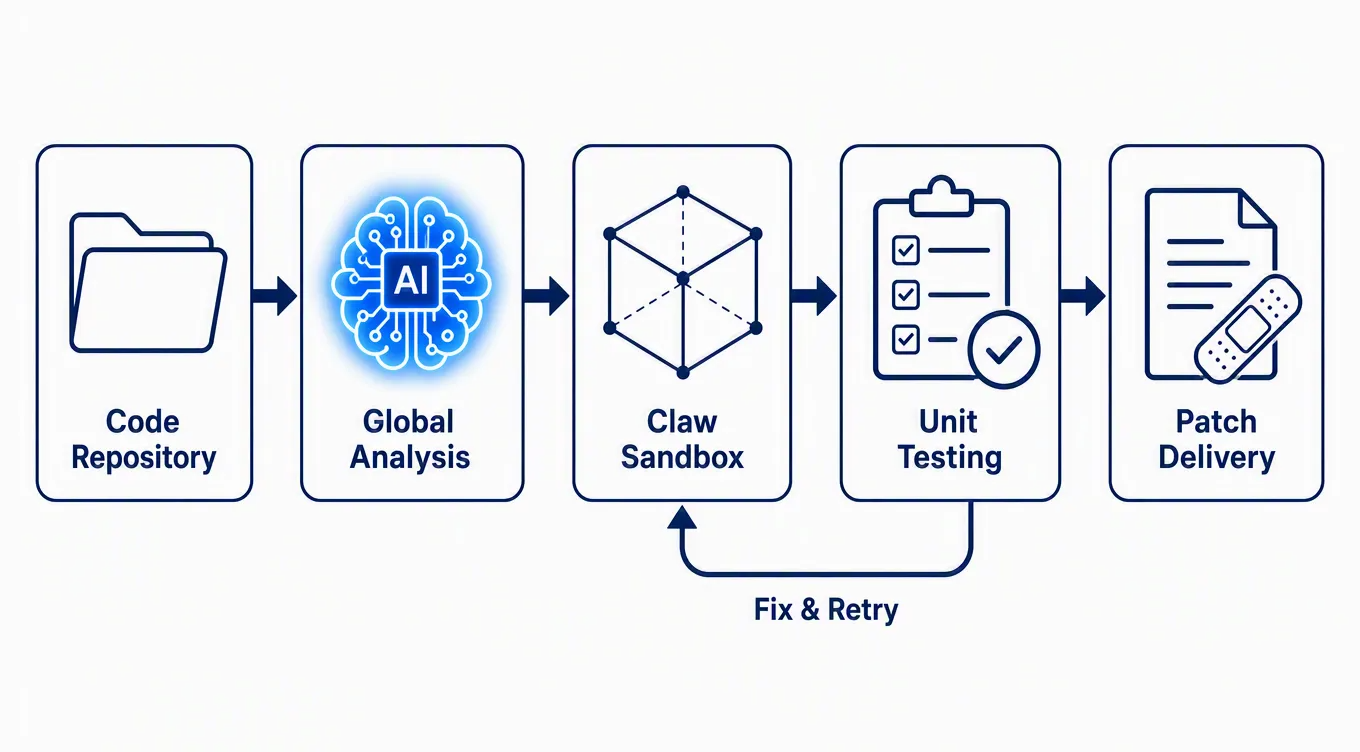
Hy4 Preview’s 1M-token context window is designed to support repository-scale understanding. It can help developer agents reason across source trees, dependency definitions, configuration files, and engineering constraints within a more complete context.
In future ADP-based developer-agent workflows, Hy4 Preview can support a loop that combines repository analysis, code modification, test generation, sandbox execution, and error-driven iteration. This can make it easier for teams to explore AI-assisted refactoring and verified patch generation for complex software systems.
Recommended Evaluation Metrics for Engineering Teams
- Dependency Mapping: Accurate identification of entry points, module boundaries, service dependencies, and configuration bindings.
- Constraint Adherence: Consistent compliance with coding standards, architectural rules, and project-specific requirements across multiple files.
- Automated Verification: The ability to generate and validate test cases against proposed changes.
- Error Recovery: The ability to interpret compiler errors, test failures, and runtime logs, then revise the implementation accordingly.
- Patch Viability: The ability to produce clean, reviewable, and maintainable code changes for engineering review.
Scenario 2: Deep Cross-Document Due Diligence and Financial Analysis
Financial institutions, legal teams, consulting firms, and corporate strategy groups often review large collections of prospectuses, merger agreements, audit trails, financial reports, regulatory filings, and research materials.
The key challenge is not merely extracting information from an individual document. It is connecting clauses, figures, definitions, and risks across multiple sections and sources while preserving a traceable chain of evidence.
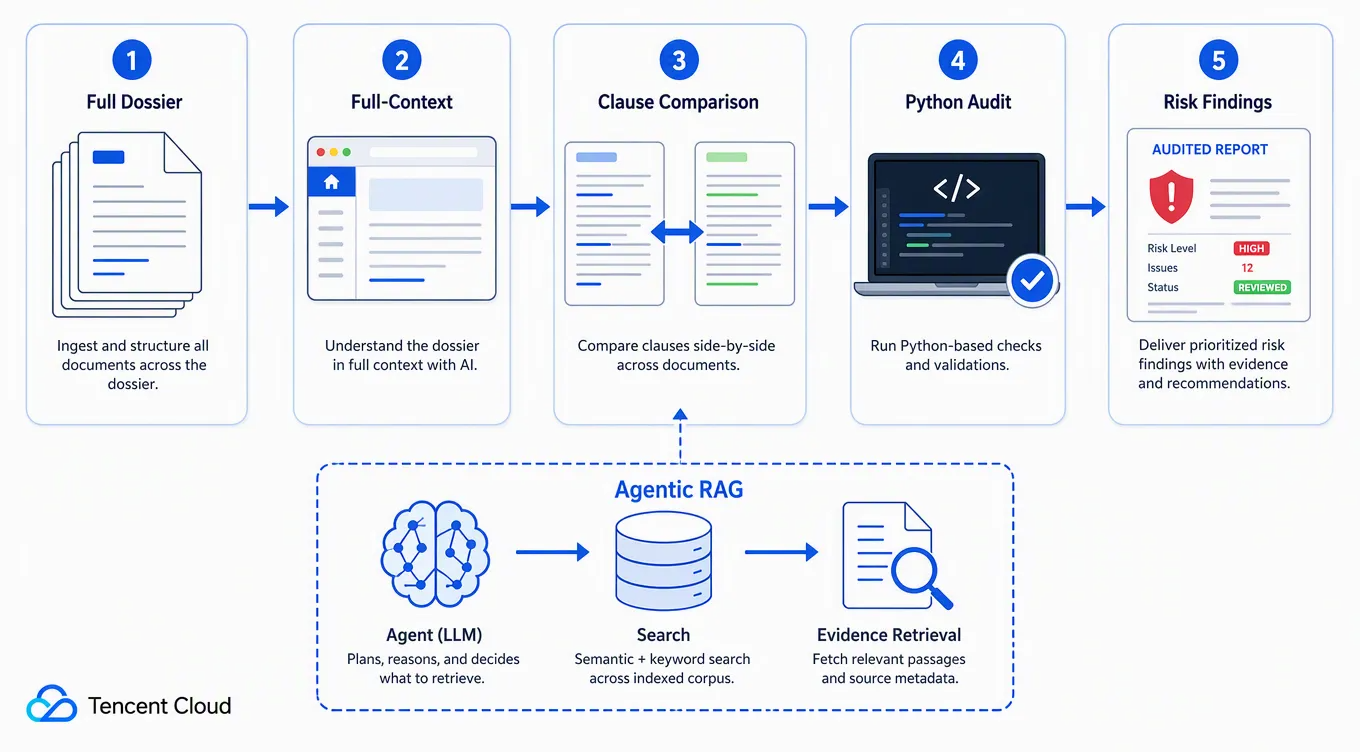
Traditional RAG pipelines typically divide long documents into smaller chunks. While retrieval remains essential for dynamic enterprise knowledge and large information repositories, excessive fragmentation can make cross-document reasoning more difficult.
Hy4 Preview’s 1M-token context capability enables a stronger Full-Context and Agentic RAG approach. Agents can work with larger portions of a complete dossier, compare information across distant sections, use tools for calculations or validation, and generate findings that connect conclusions to underlying evidence.
Three-Tier Evaluation Framework
- Information Pinpointing: Accurately locating relevant clauses, tables, figures, and source references across extensive materials.
- Cross-Section Synthesis: Comparing contract obligations, disclosure language, financial metrics, and historical changes across documents.
- Structured Findings: Producing executive-ready risk summaries, analytical reports, and evidence-backed recommendations.
Scenario 3: Multi-System Enterprise Workflow Orchestration
Enterprise operations frequently span many disconnected systems, including CRMs, ERPs, project-management platforms, customer-service tools, approval systems, and collaboration applications.
AI agents operating across these environments need more than a single tool call. They must break down a goal, validate preconditions, follow workflow dependencies, format API requests correctly, interpret tool results, and respond safely when exceptions occur.
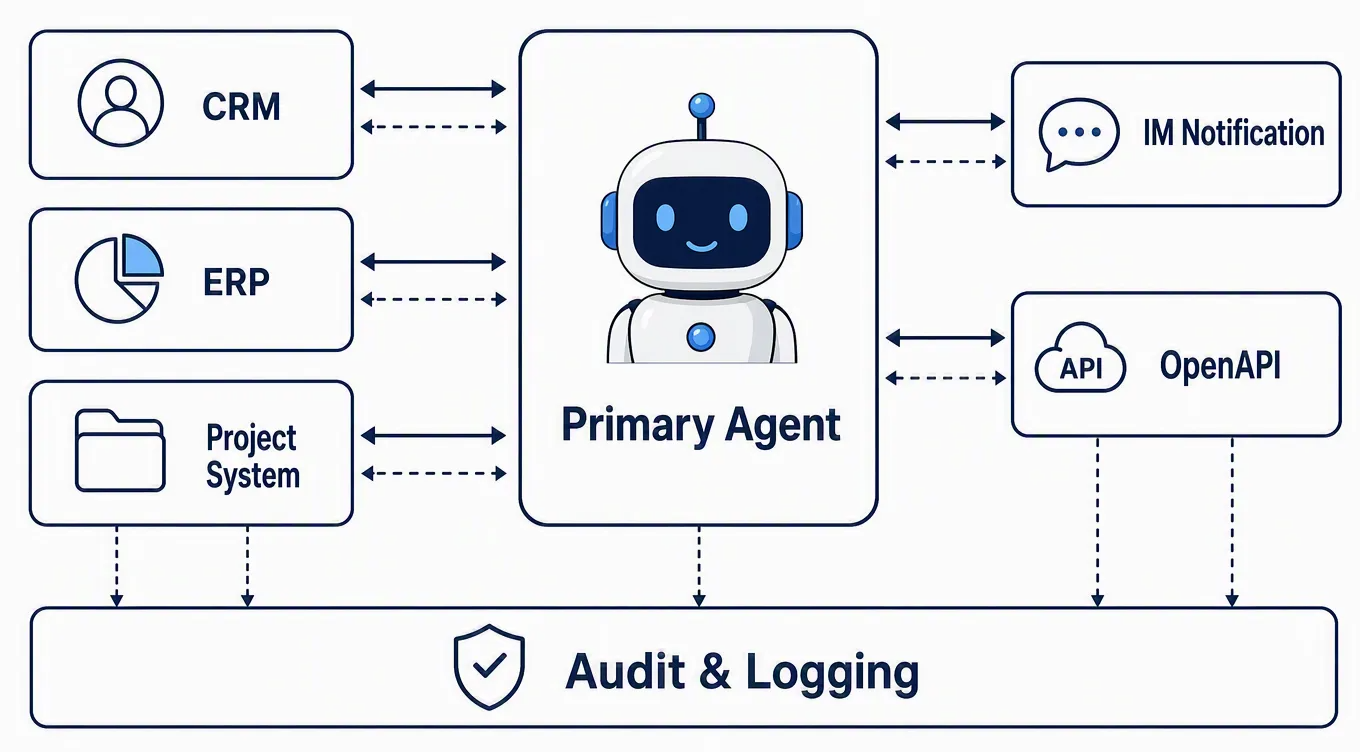
Hy4 Preview is designed for long-horizon task execution and resilient tool orchestration. In future ADP workflows, the model can help agents maintain the broader task objective while coordinating multiple steps, handling incomplete data, and proposing fallback options when systems return errors or unexpected responses.
Representative Cross-System Flow
- Extract customer inquiries and contract requests from a CRM.
- Query inventory, pricing rules, credit limits, or fulfillment data from an ERP.
- Create milestones and tasks in a project-management platform.
- Publish structured summaries and action items to enterprise collaboration channels.
- Trigger fallback actions or escalate complex exceptions to human specialists.
Future Integration with Tencent Cloud ADP
Tencent Cloud ADP is designed to help teams build, orchestrate, deploy, and govern enterprise AI agents. The upcoming availability of Hy4 Preview will expand the platform’s model capabilities for workloads that require large context capacity, complex planning, and reliable multi-step execution.
Once Hy4 Preview is available on ADP, developers and enterprises will be able to evaluate it alongside ADP capabilities such as:
- Agent development and application orchestration.
- Visual workflow design for multi-step business processes.
- Enterprise connectors and API-based tool integrations.
- Isolated sandbox environments for code execution and verification.
- Knowledge-base augmentation and retrieval workflows.
- Observability and governance for agent execution.
Developers should follow Tencent Cloud ADP announcements and official documentation for the formal availability timeline, supported configurations, regional coverage, and integration details.
Enterprise Model Selection Matrix
Tencent Cloud ADP provides a unified multi-model environment for enterprise agent development. Different models may be selected according to the complexity, context requirements, modality, latency targets, and tool-use characteristics of each workflow.
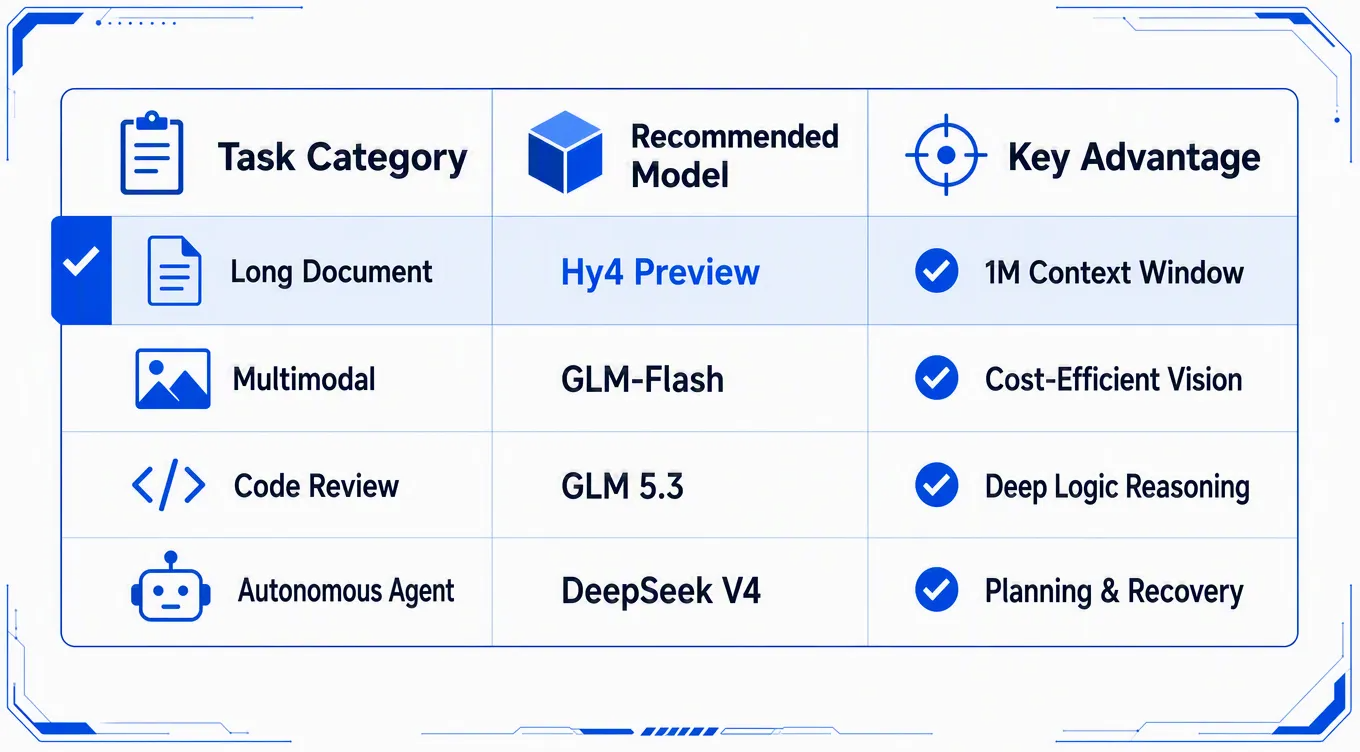
- Million-Token Context, Complex Software Engineering, and Long-Horizon Planning: Consider Tencent Hunyuan Hy4 Preview for repository-scale reasoning, large-document understanding, and complex agent planning.
- Multimodal UI or Image Processing and High-Concurrency Pipelines: Consider models optimized for visual understanding, rapid responses, and cost-efficient high-throughput workloads.
- Specialized Software Engineering and Security Review: Consider models selected for deep code reasoning, vulnerability analysis, and software quality workflows.
- Autonomous Goal Planning and Tool Loops: Consider models with strong structured tool use, workflow decomposition, and exception-handling capabilities.
Evaluation Checklist for Long-Context Agents
When Hy4 Preview becomes available for ADP workflows, teams should evaluate more than single-turn response quality. The most meaningful benchmark is the performance of the complete agent loop.
| Evaluation Dimension | Key Criteria |
|---|---|
| Contextual Integrity | Identifies structural hierarchies, dependencies, and subtle constraints across large files and long documents. |
| Instruction Persistence | Retains formatting requirements, policy constraints, and business guardrails through extensive multi-turn interactions. |
| Task Decomposition | Breaks ambiguous goals into logically ordered, actionable, and verifiable sub-tasks. |
| Tool Calling Accuracy | Formats valid parameters, interprets return schemas, and handles nested outputs correctly. |
| Autonomous Recovery | Detects API timeouts, missing dependencies, conflicting data, and other execution failures, then proposes viable fallback actions. |
| Deliverable Usability | Produces verifiable and production-oriented outputs, such as runnable patches, structured reports, and auditable analysis results. |
Frequently Asked Questions
1. When will Tencent Hunyuan Hy4 Preview be available on Tencent Cloud ADP?
Tencent Hunyuan Hy4 Preview is planned to launch on Tencent Cloud ADP. Availability timing, supported regions, and product-level configuration details will be announced through official Tencent Cloud channels.
2. What workloads are best suited to Hy4 Preview?
Hy4 Preview is designed for high-complexity and context-intensive workloads, including repository-scale software engineering, long-document analysis, contract comparison, financial auditing, data modeling, scientific research, and multi-system workflow orchestration.
3. Does a 1M-token context window eliminate the need for RAG?
Not necessarily. A large context window can reduce fragmentation and improve full-document reasoning, but RAG remains valuable for real-time enterprise knowledge, frequently changing data, access-controlled information, and very large content repositories. A hybrid approach can combine full-context understanding, retrieval, tool use, and evidence verification.
4. How does the 770B MoE architecture balance performance and cost?
Hy4 Preview uses a Mixture-of-Experts design that activates approximately 49B parameters per token from a total capacity of 770B parameters. This approach aims to preserve large-scale knowledge and reasoning capacity while avoiding the full inference cost of activating every parameter for every token.
Summary and Next Steps
Tencent Hunyuan Hy4 Preview represents an upcoming foundation model option for enterprises building long-context, high-complexity AI agents. Its 770B-A49B MoE architecture, 1M-token context window, and agent-oriented capabilities are designed to support demanding tasks that require persistent reasoning, tool use, and multi-step execution.
Together with Tencent Cloud ADP’s agent-building, workflow orchestration, sandbox, connector, knowledge, and observability capabilities, Hy4 Preview is expected to help enterprises explore more capable and reliable AI-agent workflows.
- Platform Portal: Visit Tencent Cloud ADP to learn more about enterprise agent development, workflow orchestration, sandbox execution, and platform capabilities.
- Developer Documentation: Explore the Official ADP Documentation for product information, API references, and integration resources.
- Hy4 Preview Updates: Follow Tencent Cloud announcements for the official ADP launch schedule and availability details for Tencent Hunyuan Hy4 Preview.

Start building today
If you need more support, please contact us