
Enterprise Knowledge Base Multi-Agent System
Build a Multi-Agent Q&A system with orchestrator + 3 specialized sub-Agents. Learn domain-specific retrieval with Tencent Cloud ADP.


Executive Summary
Enterprise knowledge is scattered across HR, Finance, and IT departments, making it difficult for employees to find information efficiently. This article demonstrates how to build a Multi-Agent enterprise knowledge base Q&A system using Tencent Cloud ADP.
Key Highlights:
- "Orchestrator Agent + three specialized sub-Agents" hierarchical architecture
- Domain-specific retrieval through knowledge base tagging
- Each sub-Agent focuses on its domain for more accurate answers
- Unified knowledge base maintenance reduces operational costs
1. Pain Points in Enterprise Knowledge Management
1.1 Challenges with Traditional Knowledge Bases
Enterprises commonly face these knowledge management challenges:
| Pain Point | Symptoms | Business Impact |
|---|---|---|
| Knowledge Silos | HR, Finance, and IT maintain separate document repositories | Employees don't know where to find answers |
| Inefficient Search | Full-text search returns too many results | Finding one answer takes 15+ minutes on average |
| Lack of Expertise | Generic Q&A systems don't understand domain terminology | Inaccurate answers erode employee trust |
| High Maintenance Cost | Multiple systems require duplicate updates | IT teams are overwhelmed |
1.2 Why Multi-Agent?
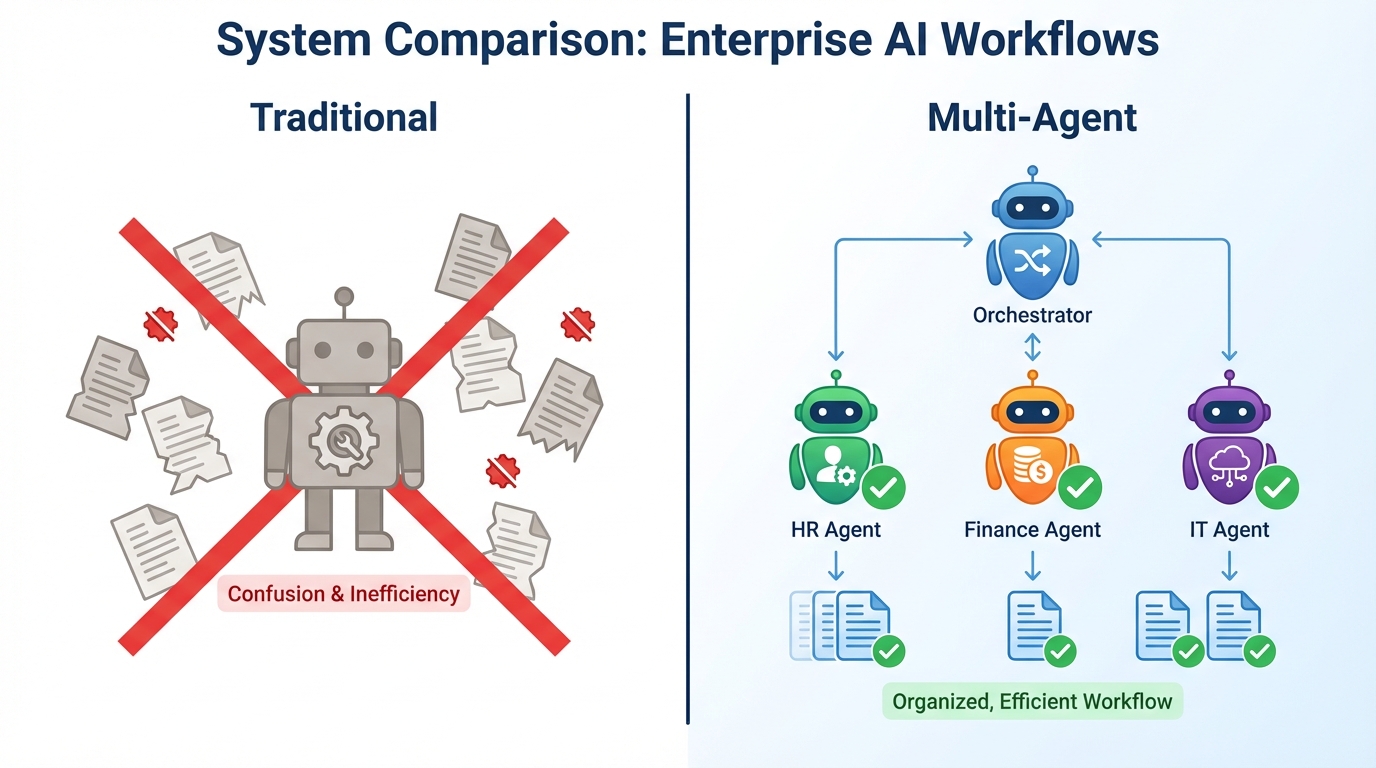
A single Agent handling the entire company knowledge base faces two core problems:
Problem 1: Blurred Knowledge Boundaries
When employees ask "How do I request vacation?" and "How do I apply for a server?", a single Agent searching through massive documents often results in:
- Long retrieval times with mixed, less relevant results
- Inability to adjust response style for different domains
- Difficulty handling complex cross-department questions
Problem 2: Access Control Challenges
Some knowledge involves sensitive information (e.g., compensation policies, financial procedures) requiring fine-grained access control.
2. System Architecture Design
2.1 Overall Architecture
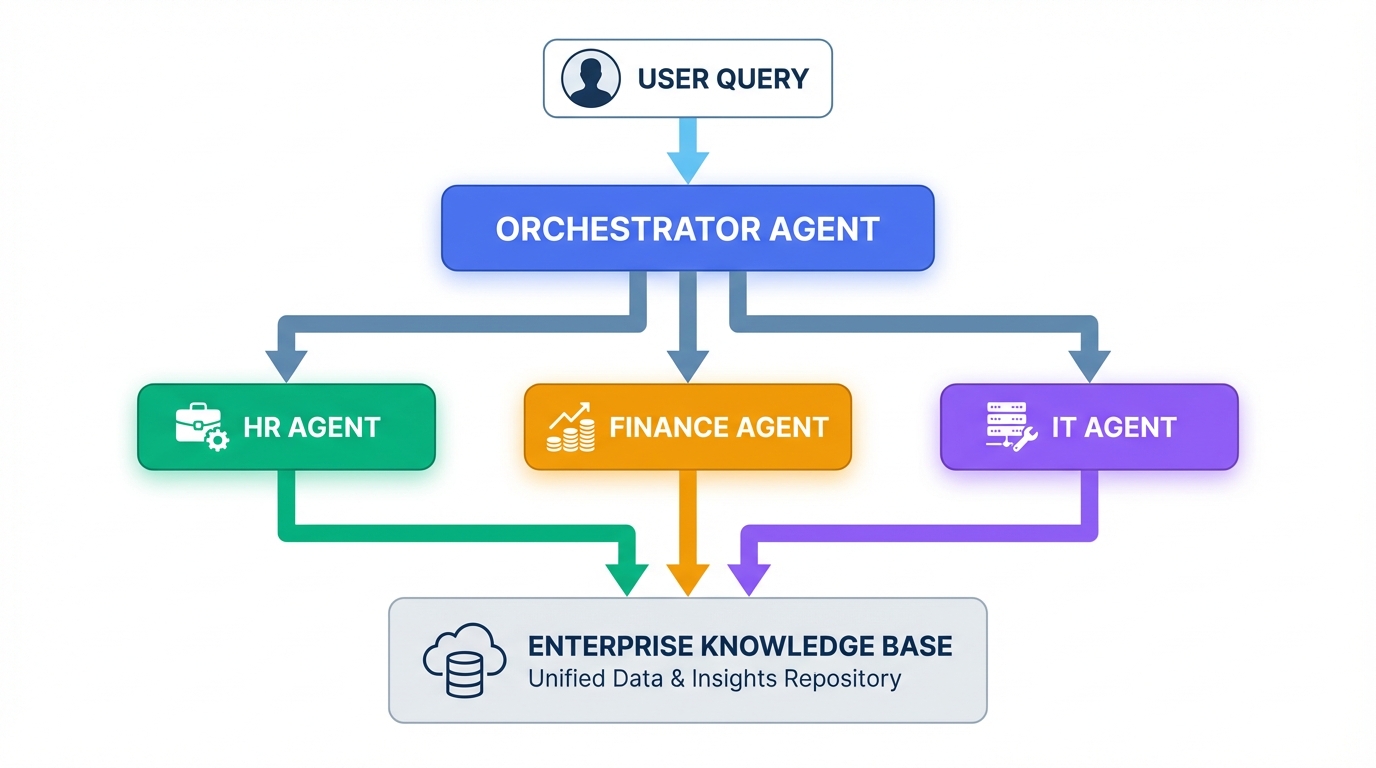
This system adopts a "1+3" Multi-Agent architecture:
                    User Question
                         ↓
                ┌────────────────┐
                │  Orchestrator  │
                │    Agent       │
                │ (Intent Router)│
                └────────┬───────┘
                         ↓
        ┌────────────────┼────────────────┐
        ↓                ↓                ↓
┌───────────────┐ ┌───────────────┐ ┌───────────────┐
│   HR Agent    │ │ Finance Agent │ │  IT Agent     │
│(HR tag+Others) │ │(Finance+Others)│ │ (IT tag+Others)│
└───────────────┘ └───────────────┘ └───────────────┘
        ↓                ↓                ↓
        └────────────────┼────────────────┘
                         ↓
                  Expert Response
2.2 Role Distribution
| Agent | Responsibility | Accessible Tags | Typical Questions |
|---|---|---|---|
| Orchestrator | Understand user intent, route to appropriate sub-Agent | None | Determine which domain the question belongs to |
| HR Agent | Handle personnel, attendance, and benefits questions | HR, Others | Leave policies, onboarding process, performance reviews |
| Finance Agent | Handle reimbursement, budget, and invoice questions | Finance, Others | Travel expenses, invoice requests, budget applications |
| IT Agent | Handle system, equipment, and access questions | IT, Others | VPN setup, device requests, system troubleshooting |
2.3 Knowledge Base Tagging System
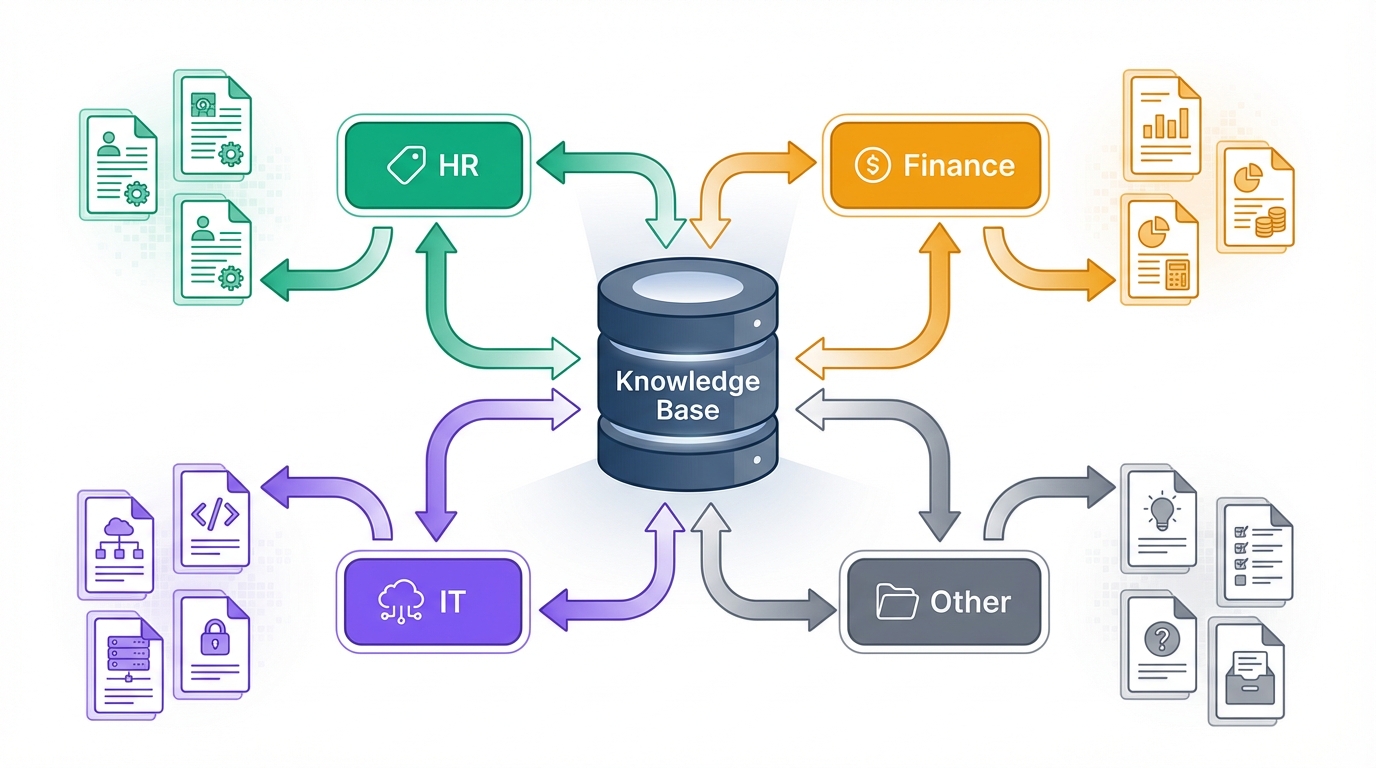
All documents are stored in a unified knowledge base, categorized by tags:
| Tag | Example Documents | Accessible By |
|---|---|---|
| HR | Employee handbook, attendance policies, benefits guide | HR Support Agent |
| Finance | Reimbursement procedures, financial policies, invoice management | Finance Support Agent |
| IT | System manuals, device request forms, troubleshooting guides | IT Support Agent |
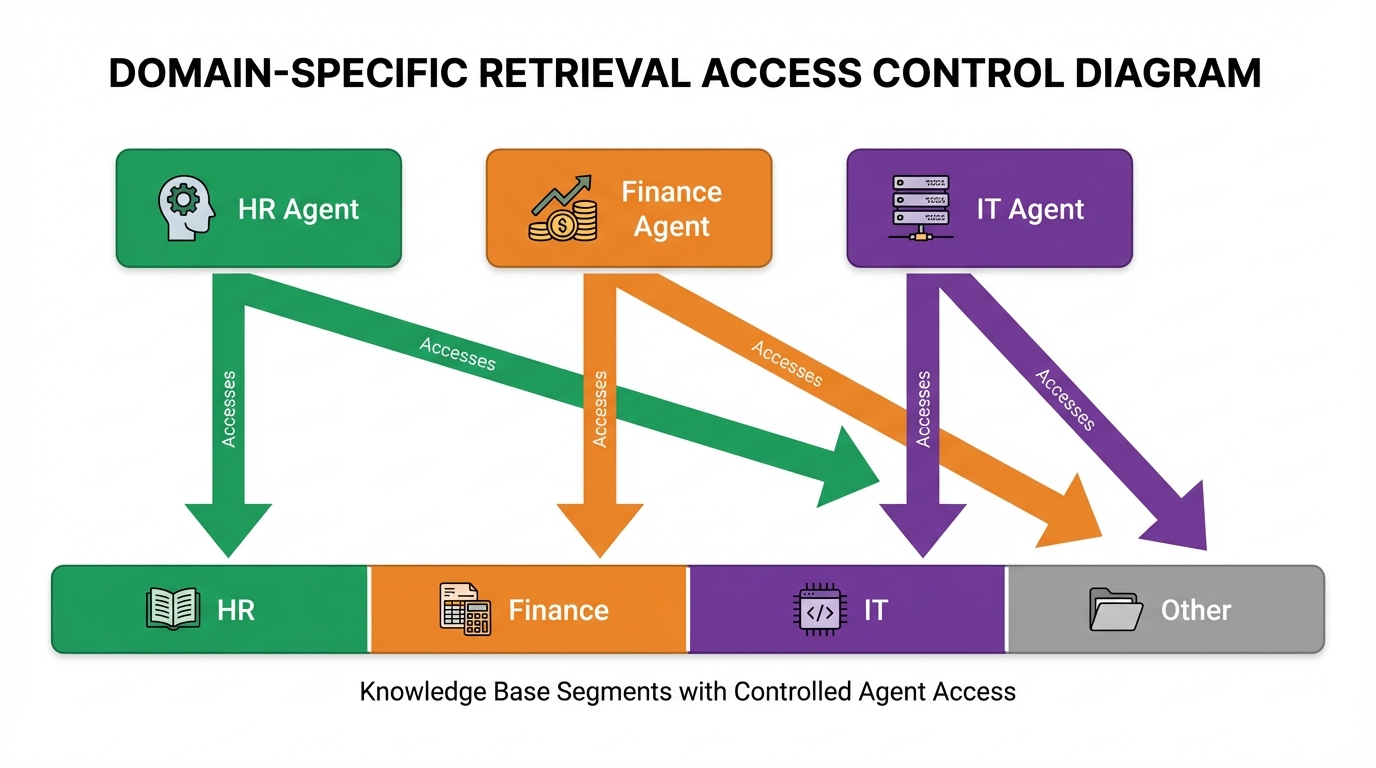
| Other | Company overview, general procedures, shared resources | All sub-Agents |
3. Building on Tencent Cloud ADP
3.1 Create Application
Step 1: Create a New Application
Log in to Tencent Cloud ADP and create a new Multi-Agent application, then navigate to "Knowledge":
- Click "Import"
- Create and add "File tag"
- Upload department documents sequentially
Step 2: Upload Documents with Tags
When uploading department documents, assign corresponding tags:
Enterprise Knowledge Base/
├── [HR] Company HR Management System and Issue Handling Procedures.docx
├── [Finance] Company Financial System and Issue Handling Procedures.docx
├── [IT] Common Issues IT Operations Manual.md
└── [Others] IntelliFuture Tech Co.docx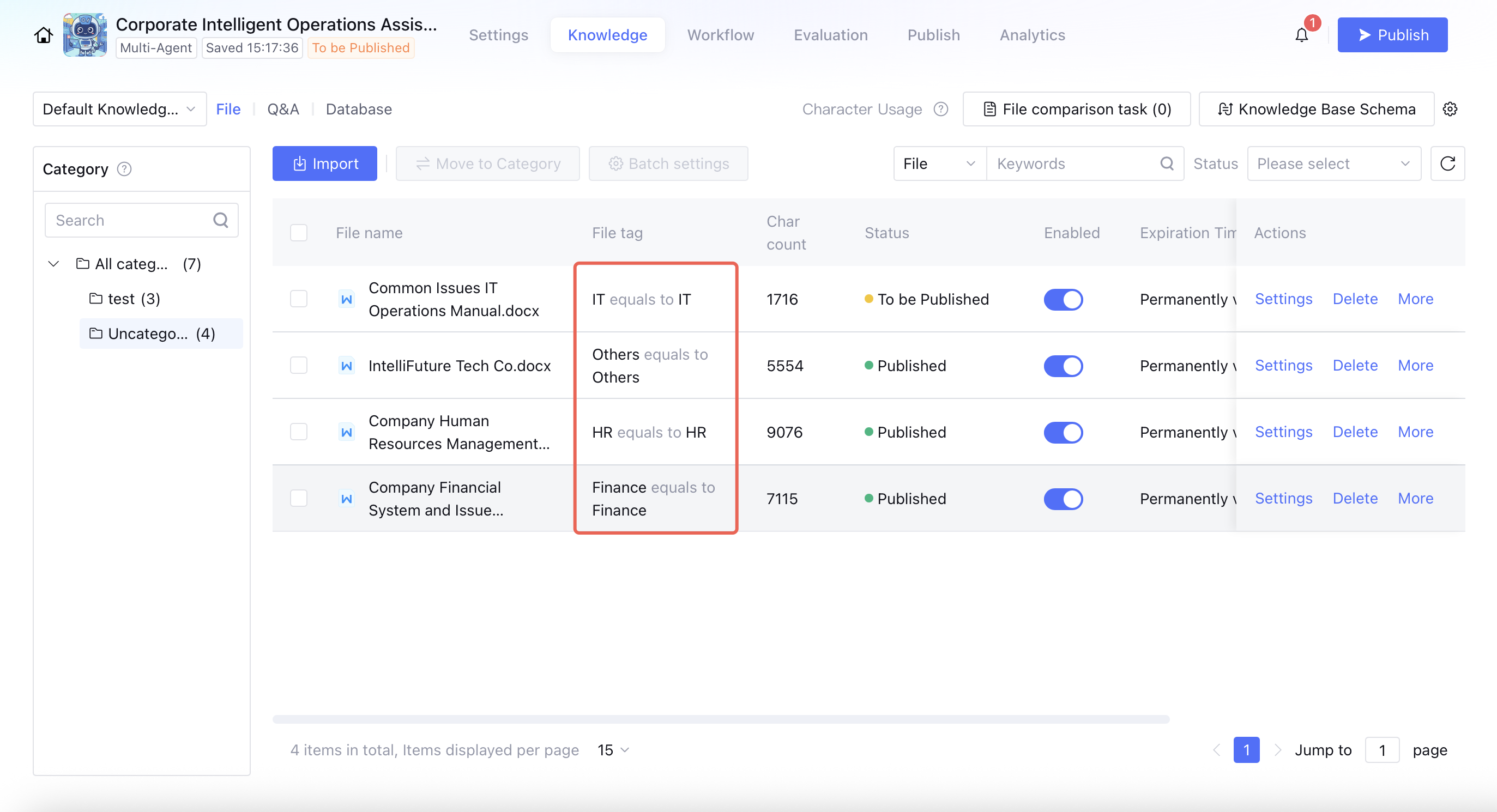
3.2 Create Sub-Agents
HR Support Assistant (Agent) Configuration Example:
Role Definition:
You are an enterprise HR expert, specializing in answering employee questions about personnel, attendance, benefits, and training.

Task Description:
1. Answer questions based on documents tagged "HR" and "Others" in the knowledge base
2. Provide accurate, professional answers citing specific policy clauses
3. For uncertain questions, suggest contacting the HR department

Response Style:
- Friendly and professional, like a senior HR colleague
- Numbers (e.g., leave days) must be accurately cited from documents
- Present complex procedures as step-by-step lists
Finance Support Assistant (Agent) Configuration Example:
Role Definition:
You are an enterprise financial advisor, specializing in answering employee questions about reimbursement, budgets, invoices, and payments.

Task Description:
1. Answer questions based on documents tagged "Finance" and "Others" in the knowledge base
2. Ensure accuracy for amounts, deadlines, and key information
3. For complex financial questions, suggest consulting the Finance department

Response Style:
- Precise and rigorous, focusing on numbers and procedures
- For reimbursement questions, explain required materials and approval process
- Provide form download links when necessary
IT Support Assistant (Agent) Configuration Example:
Role Definition:
You are an enterprise IT support specialist, specializing in answering employee questions about system usage, device requests, and troubleshooting.

Task Description:
1. Answer questions based on documents tagged "IT" and "Others" in the knowledge base
2. Provide clear step-by-step instructions, with screenshots when helpful
3. For urgent issues, provide IT hotline and ticket submission methods

Response Style:
- Concise and clear with well-defined steps
- Explain technical terms for non-technical employees
- Provide quick solutions for common issues
3.3 Configure the Corporate Intelligent Operations Assistant Main Agent (Orchestrator Agent)
The orchestrator Agent handles intent recognition and task routing:
Role Definition:
You are the dispatch center for the enterprise intelligent assistant, responsible for understanding employee questions and routing them to the appropriate specialized Agent.

Task Description:
1. Analyze the domain of user questions: HR, Finance, or IT
2. Forward questions to the corresponding specialized Agent
3. For multi-domain questions, route based on primary intent

Routing Rules:
- Personnel, attendance, benefits, training, onboarding/offboarding → HR Assistant
- Reimbursement, invoices, budgets, payments, financial approvals → Finance Assistant
- Systems, devices, network, permissions, troubleshooting → IT Assistant
- When uncertain, ask the user to clarify their needs
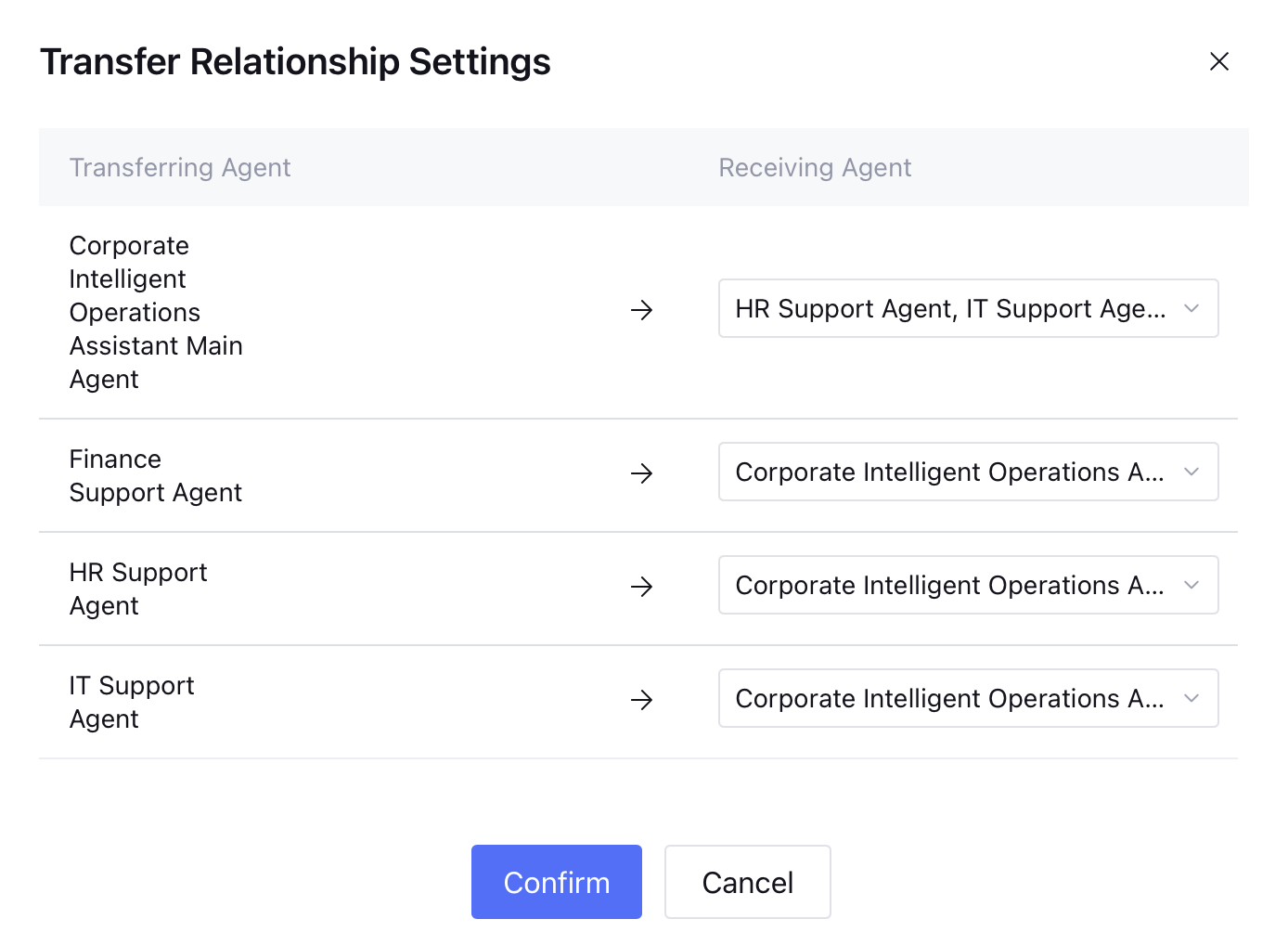
3.4 Select Agent Collaboration Mode
Configure the Agent handoff relationships in "Settings":
3.5 Debug and Publish
Debugging Checklist:
- Test typical questions from each domain to verify routing accuracy
- Confirm sub-Agents correctly retrieve documents with their assigned tags
- Validate cross-domain question handling logic
- Verify answer accuracy and professionalism
Test Case Examples:
| Test Question | Expected Route | Verification Point |
|---|---|---|
| What's the onboarding process? | HR Support Assistant | Does it cite leave policy? |
| What's the reimbursement process? | Finance Support Assistant | Does it explain the process and required materials? |
| My computer crashed, what should I do? | IT Support Assistant | Does it provide troubleshooting steps? |
| Where is the Finance office? | Any Agent (Other tag) | Is the answer correct? |
4. Technical Implementation of Domain-Specific Retrieval
4.1 Tag Filtering Mechanism
In Tencent Cloud ADP, configure tag filters when setting up knowledge base retrieval for each sub-Agent:
HR Agent Retrieval Configuration:
- Knowledge Base: Enterprise Knowledge Base
- Tag Filter: HR OR Other
Finance Agent Retrieval Configuration:
- Knowledge Base: Enterprise Knowledge Base
- Tag Filter: Finance OR Other
IT Agent Retrieval Configuration:
- Knowledge Base: Enterprise Knowledge Base
- Tag Filter: IT OR Other
4.2 Why Can Every Agent Access the "Others" Tag?
The "Others" tag stores company-wide information such as:
- Company overview, organizational structure
- Office locations, contact information
- General procedures, shared resources
This information may be needed in any conversation, so all sub-Agents should have access.
5. Results and Optimization
5.1 Performance Comparison
After deploying this system, one enterprise saw significant improvements:
| Metric | Before | After | Improvement |
|---|---|---|---|
| Average resolution time | 15 minutes | 30 seconds | 97% |
| Employee satisfaction | 62% | 91% | +29% |
| HR/Finance/IT inquiries | 200/day | 40/day | 80%↓ |
| Knowledge base maintenance staff | 3 people | 1 person | 67%↓ |
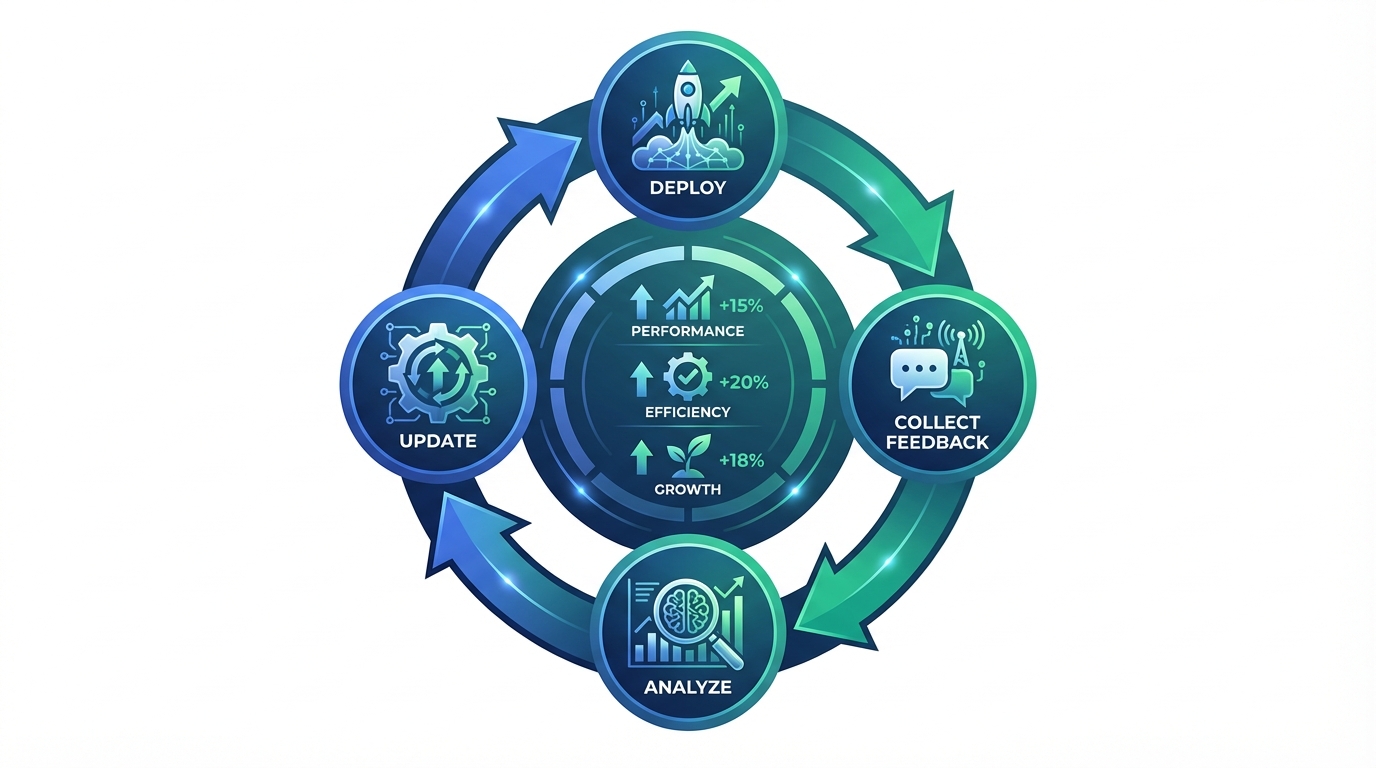
5.2 Continuous Optimization Recommendations
1. Regular Knowledge Base Updates
- Update documents promptly when policies change
- Remove outdated content to prevent misinformation
- Add new documents based on frequently asked questions
2. Analyze Conversation Logs
- Identify questions with inaccurate answers
- Discover gaps in knowledge base content
- Optimize Agent prompts
3. Expand Agent Capabilities
- Integrate enterprise system APIs (e.g., attendance, reimbursement systems)
- Support action-based tasks (e.g., submit tickets, check balances)
- Add new specialized Agents (e.g., Legal, Administration)
6. Frequently Asked Questions
Q1: What if a user question spans multiple domains?
The orchestrator Agent routes based on the primary intent. If multi-domain collaboration is truly needed, you can configure the orchestrator to determine whether additional domain information is required after receiving the first response.
Q2: How do you handle questions not covered in the knowledge base?
Configure fallback logic in each sub-Agent's prompt:
- Clearly inform the user that no relevant information is available
- Provide human contact channels (e.g., HR email, IT hotline)
- Log the question for future knowledge base updates
Q3: How do you ensure sensitive information security?
- Don't upload sensitive documents (e.g., salary details) to the knowledge base
- Control access scope through tag permissions
- Explicitly prohibit disclosure of sensitive information in Agent prompts
Q4: Does the knowledge base require retraining after updates?
Tencent Cloud ADP's knowledge base supports real-time updates. Documents become searchable immediately after upload without model retraining.
Q5: How do you evaluate system effectiveness?
Key metrics to monitor:
- Resolution rate (Did users get satisfactory answers?)
- Routing accuracy (Were questions sent to the correct Agent?)
- Answer accuracy (Do answers match knowledge base content?)
- User satisfaction (Collected through feedback)
7. Use Cases and Limitations
7.1 Suitable Scenarios
| Scenario | Description |
|---|---|
| Medium to large enterprises | Multiple departments, scattered knowledge, need unified access point |
| Knowledge-intensive industries | Finance, healthcare, manufacturing with complex policies |
| High inquiry volume | HR, Finance, IT receive many daily inquiries |
| Multilingual environments | Can configure multi-language Agents for different regions |
7.2 Not Suitable For
| Scenario | Reason | Alternative |
|---|---|---|
| Small teams (<50 people) | Limited knowledge volume, single Agent sufficient | Use single Agent + complete knowledge base |
| Real-time operations | Requires direct business system operations | Integrate APIs or use RPA |
| Highly personalized consulting | E.g., salary negotiations, career planning | Maintain human service channels |
Conclusion
The Multi-Agent enterprise knowledge base Q&A system achieves precise retrieval and expert answers through the "orchestrator routing + sub-Agent specialization" architecture.
Compared to traditional single-Agent solutions, this architecture offers better expertise, scalability, and maintainability, making it particularly suitable for knowledge management in medium to large enterprises.
Start now and build your enterprise knowledge base Q&A system with Tencent Cloud ADP!
Appendix: Quick Start Resources
Recommended Resources

Start building today
If you need more support, please contact us